Posted on

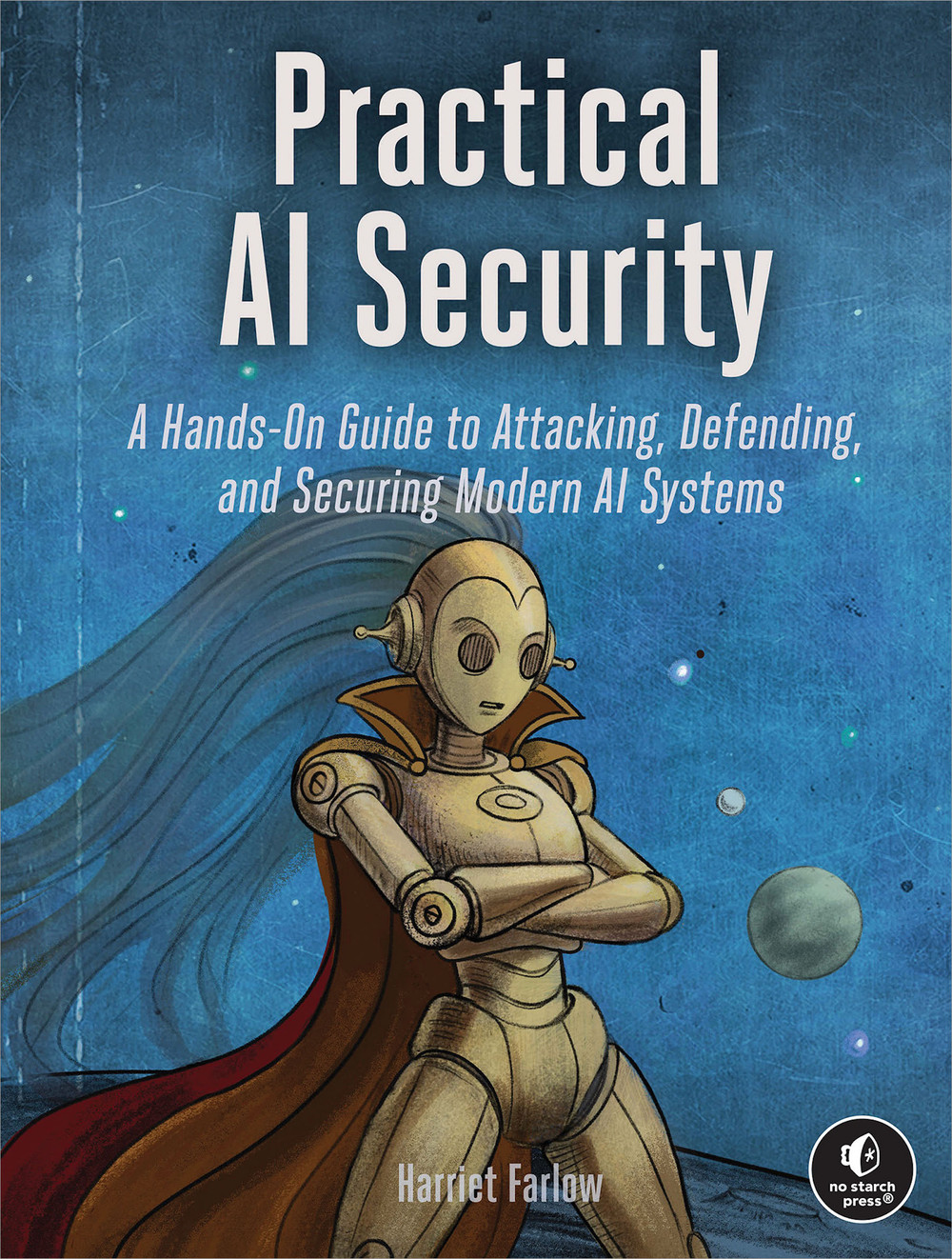
Practical AI Security

Copyright © 2026 by Harriet Farlow.

ISBN-13: 978-1-7185-0466-0 (print)
ISBN-13: 978-1-7185-0467-7 (ebook)

[Extra] https://nostarch.com/practical-ai-security

If you’re a security practitioner learning to operate in AI environments, or an ML engineer who needs to understand what adversaries actually do, Practical AI Security gives you the technical foundation the field demands.

Built from first principles, this book takes you from how models fail to how they’re exploited to how they’re defended and audited. Every technique includes clear explanations and real-world examples, and you can run the attacks and defenses yourself with over 30 hands-on Python demos.

  • Understand how different kinds of machine learning models create unique vulnerabilities, and explore how these models are integrated into more autonomous, agentic AI systems to introduce new weaknesses and risks.
  • Identify, exploit, and defend against dozens of weaknesses and attacks across the AI life cycle, including data poisoning, model theft, and prompt injection.
  • Evaluate AI systems for safety failures, bias, and alignment risks using structured benchmarking.
  • Threat-model agentic systems, RAG pipelines, and multimodal architectures using MITRE ATLAS, OWASP, and the MAESTRO framework.
  • Design and execute AI-specific red teaming campaigns, and understand what makes them distinct from traditional security tests.
  • Conduct rapid risk audits and navigate AI governance frameworks for real deployments.

Whether you use, build, deploy, or oversee AI, this isn’t niche knowledge—it’s the foundation for defending the technologies that will define the next era of human progress.
Posted on

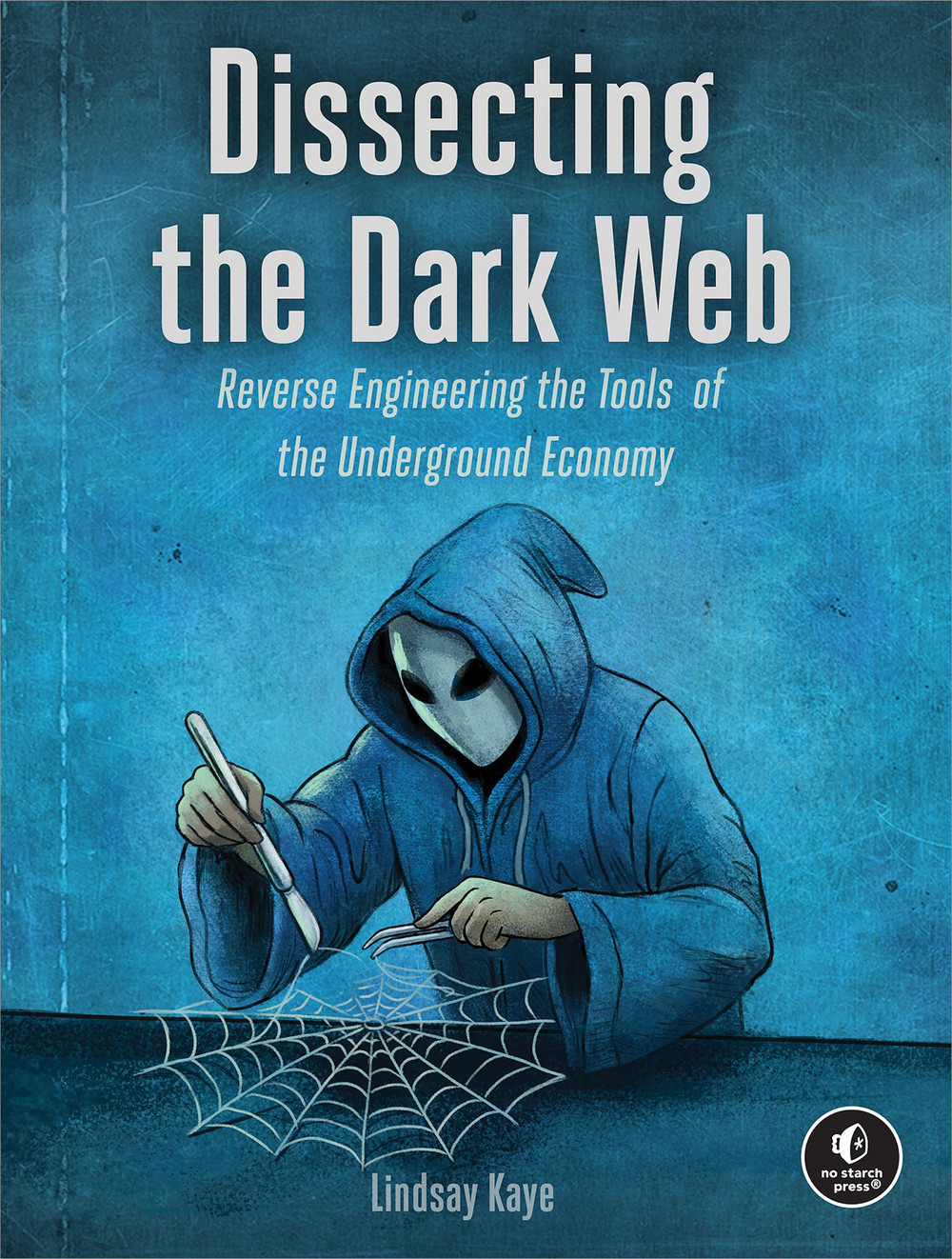
Dissecting the Dark Web

Copyright © 2026 by Lindsay Kaye.

ISBN-13: 978-1-7185-0460-8 (print)
ISBN-13: 978-1-7185-0461-5 (ebook)

[GitHub] https://github.com/DissectingTheDarkWebBook/DissectingTheDarkWeb

Getting into the dark web isn’t simple. You need Tor. You need clean OPSEC. And even then, the forums worth being in don’t just let you walk through the door. The top-tier ones require vouches from established members, Bitcoin deposits, proof that you’re somebody.

In 2021, Lindsay Kaye was among the first to reverse engineer and publicly disclose a new ransomware variant. She did it before the group behind it, BlackMatter, had even started operations. How? She found it by watching the dark web forums where the group was quietly recruiting affiliates.

This book takes you inside that world and into the code behind the tools she found there:

  • Raccoon Stealer—a credential stealer behind hundreds of millions of stolen passwords, and the SQL query it uses to pull them straight out of your browser
  • TrickBot—the banking trojan that infected millions of Windows machines, and how it injects into Chrome and hooks the functions handling your banking traffic
  • Cerberus—an Android banking trojan sold on dark web forums for $200 a month, and how it overlays a fake login page on top of your real banking app
  • LockBit—one of the most prolific ransomware operations in history, and how it kills backup services, deletes shadow copies, and pushes a Group Policy update to every machine on the domain before encryption starts
  • Mirai—the botnet that knocked half the internet offline in 2016, and how it’s able to find and infect new devices to expand its reach
  • Sodinokibi/REvil and ALPHV—two of the most destructive ransomware-as-a-service operations ever, taken apart from the affiliate recruitment posts to the encryption code

Threat reports tell you what happened. This book shows you how.

Posted on

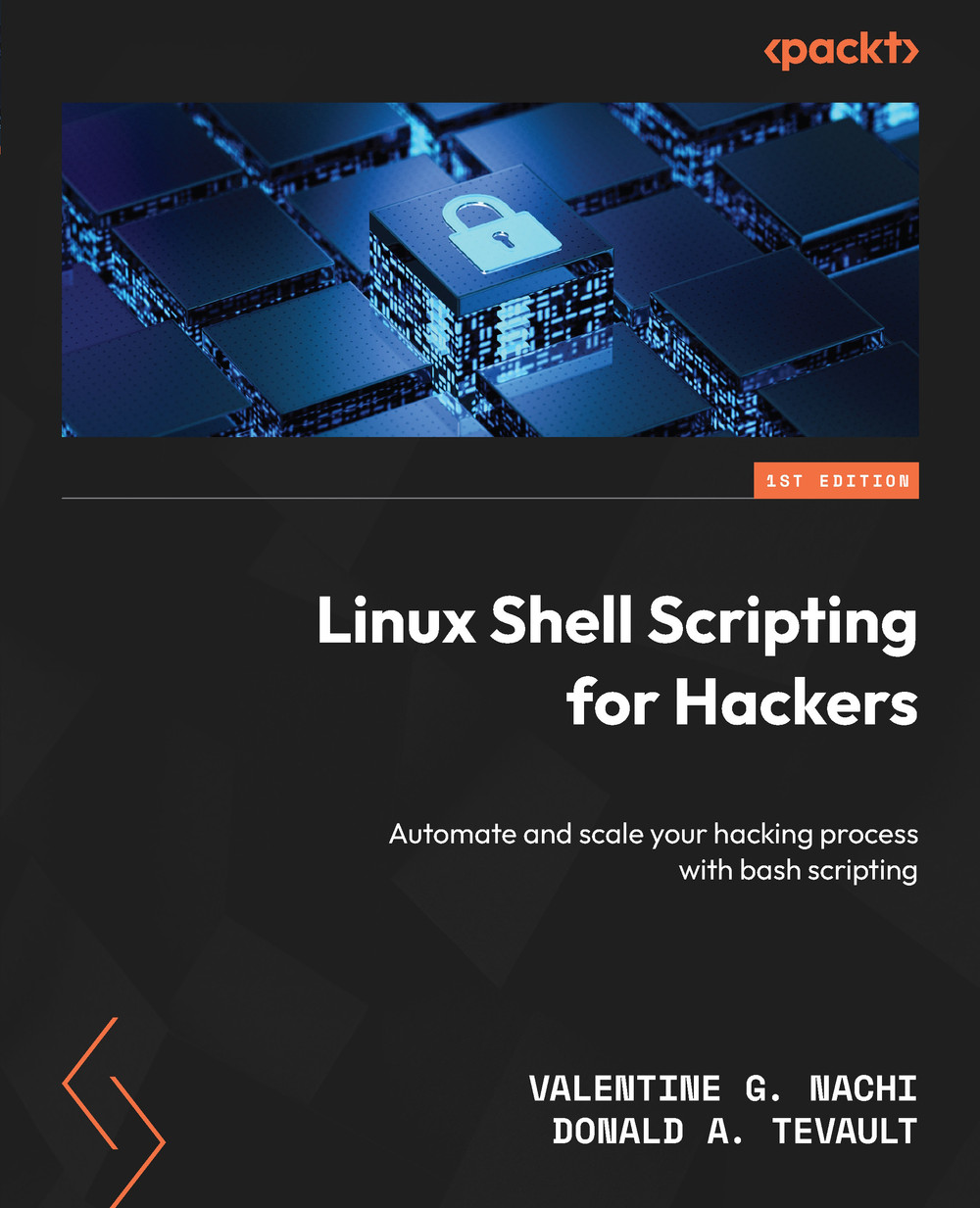
Linux Shell Scripting for Hackers

Copyright © 2026 Packt Publishing

ISBN: 978-1-83546-219-5

[GitHub] https://github.com/PacktPublishing/Linux-Shell-Scripting-for-Hackers

“Linux Shell Scripting for Hackers” equips cybersecurity professionals and ethical hackers with the necessary skills to master Bash scripting. This book provides practical guidance for automating reconnaissance, exploitation, and post-exploitation tasks, empowering readers to create custom tools and streamline workflows.

What this Book will help me do

  • Automate ethical hacking processes with customized Bash scripts.
  • Utilize tools like awk, sed, and grep for efficient data processing.
  • Design resilient scripts for system hardening and optimization.
  • Improve penetration testing pipelines through scripting integrations.
  • Gain practical expertise via real-world hacking scenarios and case studies.

Who is it for?

This book is ideal for cybersecurity enthusiasts, ethical hackers, and professionals seeking to elevate their scripting skills. Targeted towards those with a basic understanding of Linux systems and Bash scripting concepts, it also appeals to experienced penetration testers aiming to enhance their automation capabilities.

Posted on

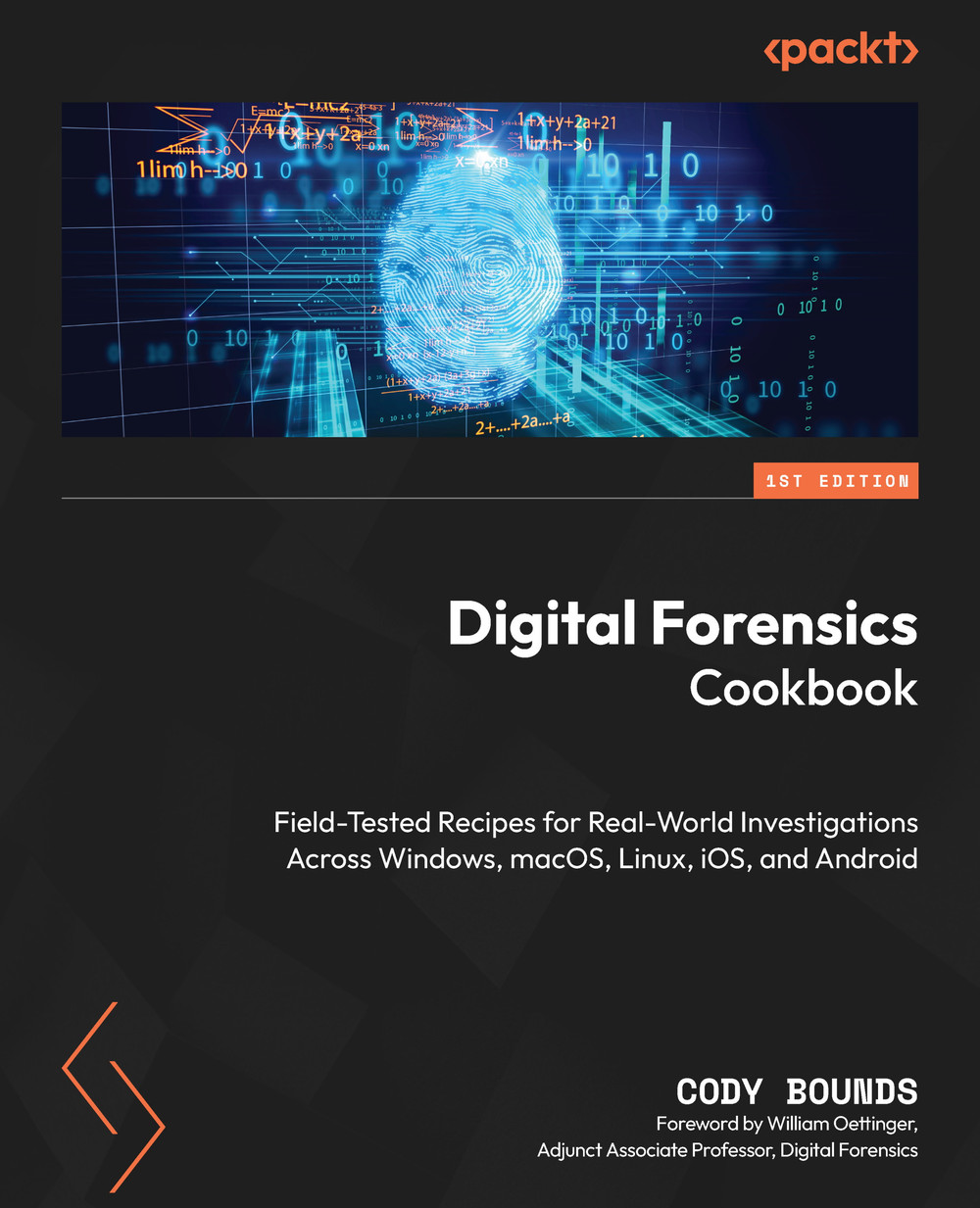
Digital Forensics Cookbook

Copyright © 2026 Packt Publishing

ISBN: 978-1-80512-755-0

[GitHub] https://github.com/PacktPublishing/Digital-Forensics-Cookbook

Learn the workflows professionals use to triage systems, uncover hidden activity, recover deleted evidence, crack encrypted containers, analyze Windows memory, and detect tampering using realistic hands-on forensic datasets.

Key Features

  • Master field-tested workflows for triage, acquisition, and cross-platform analysis
  • Uncover hidden activity, recover evidence, defeat encryption, and detect tampering
  • Build hands-on investigation skills using realistic datasets across major platforms
  • Purchase of the print or Kindle book includes a free PDF ebook

Book Description

Modern investigations and incident response efforts live and die by digital evidence. Digital Forensics Cookbook uses realistic datasets and practical workflows drawn from real investigations to uncover the truth hidden inside computers, mobile devices, and online accounts.

Rather than focusing on theory alone, this book moves you through the investigative process from triage and acquisition to artifact analysis, memory forensics, encryption challenges, malware triage, and detecting anti-forensic behavior. Along the way, you’ll perform remote artifact collection, analyze evidence across Windows, macOS, Linux, iOS, and Android systems, investigate cloud-synced accounts, recover deleted data, manually carve evidence when tools fail, and identify attempts to hide or manipulate data.

As you progress through the book, you’ll learn how to write and apply regular expressions and SQLite queries, build system timelines, baseline systems, automate analysis, verify findings across independent sources, generate custom password dictionaries to crack encrypted containers, detect metadata tampering designed to mislead investigators, and analyze Windows memory. By the end, you won’t just know how to run forensic tools; you’ll understand how investigators think, enabling you to turn scattered digital traces into clear, defensible conclusions.

What you will learn

  • Perform triage and acquire evidence during live investigations
  • Collect artifacts remotely using incident response workflows
  • Analyze evidence across Windows, macOS, Linux, iOS, and Android
  • Recover deleted data and manually carve evidence when tools fail
  • Crack encrypted containers using custom password dictionaries
  • Use regex and SQLite queries to uncover hidden investigative clues
  • Detect anti-forensic techniques and metadata tampering
  • Analyze Windows memory using Volatility to uncover live artifacts

Who this book is for

This book is for digital forensic investigators, incident responders, and security professionals who want to build practical investigation skills using real-world workflows and realistic datasets. It’s also ideal for students and analysts entering the field who want hands-on experience recovering evidence, analyzing artifacts, and thinking like an investigator.

Posted on

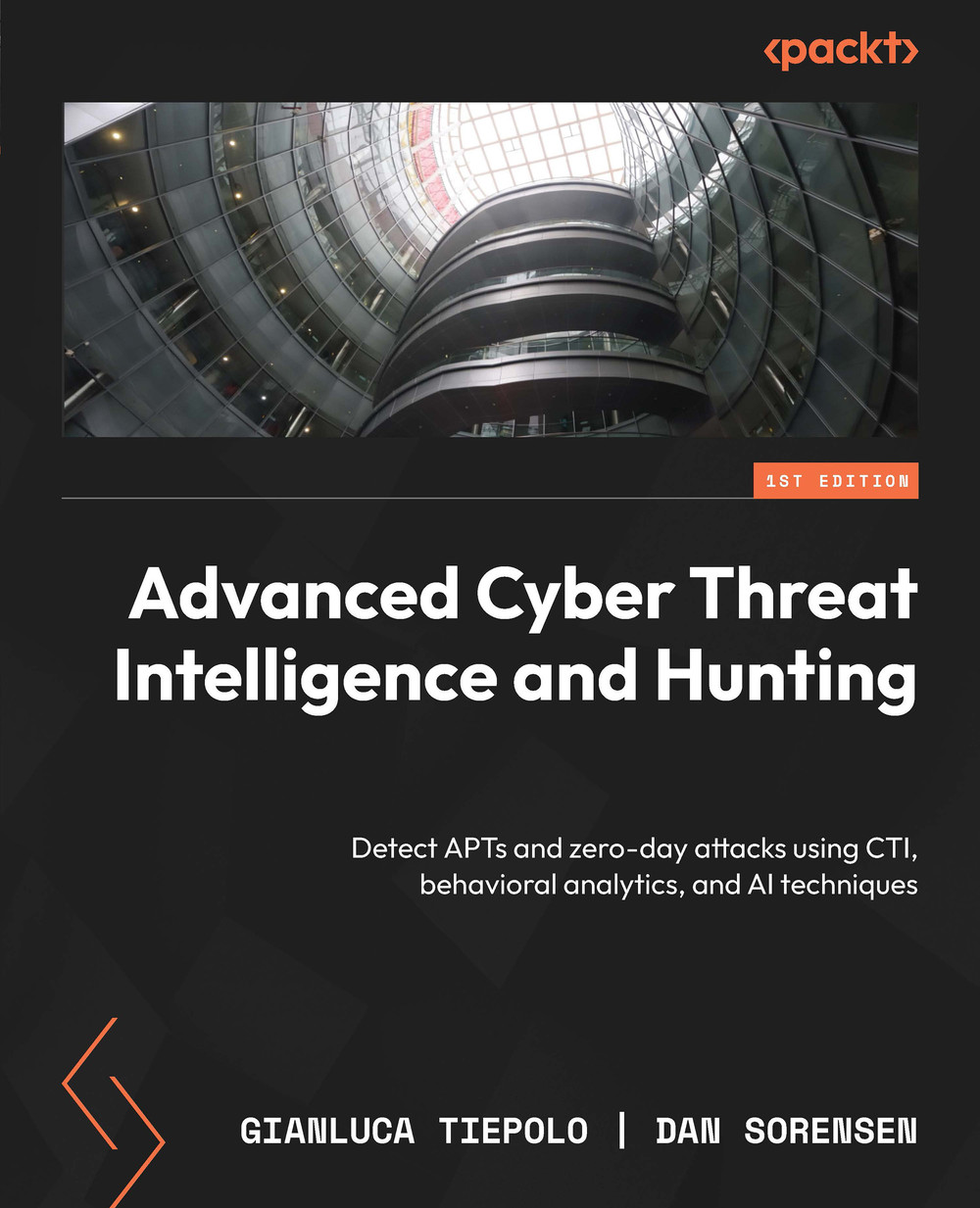
Advanced Cyber Threat Intelligence and Hunting

Copyright © 2026 Packt Publishing

ISBN: 978-1-80638-039-8

[GitHub] https://github.com/PacktPublishing/Advanced-Cyber-Threat-Intelligence-and-Hunting

Develop actionable strategies to proactively hunt advanced persistent threats and detect zero-days using CTI and behavior-based detection techniques

Key Features

  • Intelligence-led threat hunting framework for detecting APTs and zero-day attacks at scale
  • Hands-on detection of stealthy adversaries using behavioral analytics and machine learning
  • Real-world hunting workflows across cloud, hybrid, and enterprise environments

Book Description

Modern adversaries rely on stealth, living-off-the-land techniques, and zero-day exploitation to evade traditional security controls. This practical guide shows experienced defenders how to move beyond reactive alerts and build a proactive threat hunting capability driven by cyber threat intelligence.

Written for seasoned cybersecurity professionals, the book demonstrates how to formulate CTI-driven hunt hypotheses and detect advanced persistent threats by analyzing adversary behavior across the Cyber Kill Chain. You’ll learn how to track APT infrastructure, map attacker TTPs using the MITRE ATT&CK framework, and identify post-exploitation activity that signals successful compromise.

Through hands-on exercises, you’ll apply behavioral analytics, detection engineering, and machine learning–based anomaly detection to uncover what signature-based tools miss. Coverage includes threat hunting in cloud, hybrid, and ICS/OT environments, with real-world techniques for lateral movement, persistence, privilege escalation, and data exfiltration.

By the end of this book, you’ll be equipped to run intelligence-led threat hunts, detect advanced threats earlier, and operationalize CTI as a core part of your defensive strategy.

What you will learn

  • Build CTI-driven hypotheses for proactive threat hunting
  • Detect APT behavior across the Cyber Kill Chain
  • Identify zero-day activity using behavioral analytics
  • Apply MITRE ATT&CK to map adversary TTPs
  • Use machine learning for anomaly-based detection
  • Hunt post-exploitation activity and lateral movement
  • Investigate threats in cloud and hybrid environments
  • Design a scalable, resilient threat hunting program

Who this book is for

This book is tailored for experienced, mid-to-senior level cybersecurity professionals operating in roles focused on proactive defense. The audience includes cyber threat hunters, cybersecurity analysts, cyber intelligence analysts, and incident responders. These profiles are looking to bridge the gap between intelligence production and its actionable application in live hunting operations, and this book will help them to achieve this.