Posted on

Attacking and Exploiting Modern Web Applications

Copyright © 2023 Packt Publishing

ISBN 978-1-80181-629-8

[GitHub] https://github.com/PacktPublishing/Attacking-and-Exploiting-Modern-Web-Applications

Understand modern web security with “Attacking and Exploiting Modern Web Applications.” This book equips you with the techniques and tools needed to perform web application penetration testing effectively. You will gain hands-on experience identifying vulnerabilities like SQL Injection, XSS, RCE, and more, while exploring frameworks and tools used by security professionals and hackers.

What this Book will help me do

  • Master the mindset, methodologies, and toolsets fundamental for conducting web security assessments.
  • Identify vulnerabilities across web applications, IoT devices, and Ethereum smart contracts and learn to secure them.
  • Enhance practical skills by analyzing real-world cases and setting up secure environments.
  • Learn the process of automating vulnerability detection with Bash and Python scripting.
  • Familiarize yourself with handling and disclosing vulnerabilities responsibly.

Who is it for?

If you are a penetration tester, red team member, or security analyst looking to improve your ability to identify and exploit vulnerabilities, this book is for you. Developers aiming to understand security risks inherent in their applications or DevOps professionals securing their environments will find value here too. It also appeals to CISOs and security managers seeking insights into threats and risk mitigation.
Posted on

Kerberos: The Definitive Guide

Copyright © 2010 O’Reilly Media, Inc.

Kerberos, the single sign-on authentication system originally developed at MIT, deserves its name. It’s a faithful watchdog that keeps intruders out of your networks. But it has been equally fierce to system administrators, for whom the complexity of Kerberos is legendary.Single sign-on is the holy grail of network administration, and Kerberos is the only game in town. Microsoft, by integrating Kerberos into Active Directory in Windows 2000 and 2003, has extended the reach of Kerberos to all networks large or small. Kerberos makes your network more secure and more convenient for users by providing a single authentication system that works across the entire network. One username; one password; one login is all you need.Fortunately, help for administrators is on the way. Kerberos: The Definitive Guide shows you how to implement Kerberos for secure authentication. In addition to covering the basic principles behind cryptographic authentication, it covers everything from basic installation to advanced topics like cross-realm authentication, defending against attacks on Kerberos, and troubleshooting.In addition to covering Microsoft’s Active Directory implementation, Kerberos: The Definitive Guide covers both major implementations of Kerberos for Unix and Linux: MIT and Heimdal. It shows you how to set up Mac OS X as a Kerberos client. The book also covers both versions of the Kerberos protocol that are still in use: Kerberos 4 (now obsolete) and Kerberos 5, paying special attention to the integration between the different protocols, and between Unix and Windows implementations.If you’ve been avoiding Kerberos because it’s confusing and poorly documented, it’s time to get on board! This book shows you how to put Kerberos authentication to work on your Windows and Unix systems.

Posted on

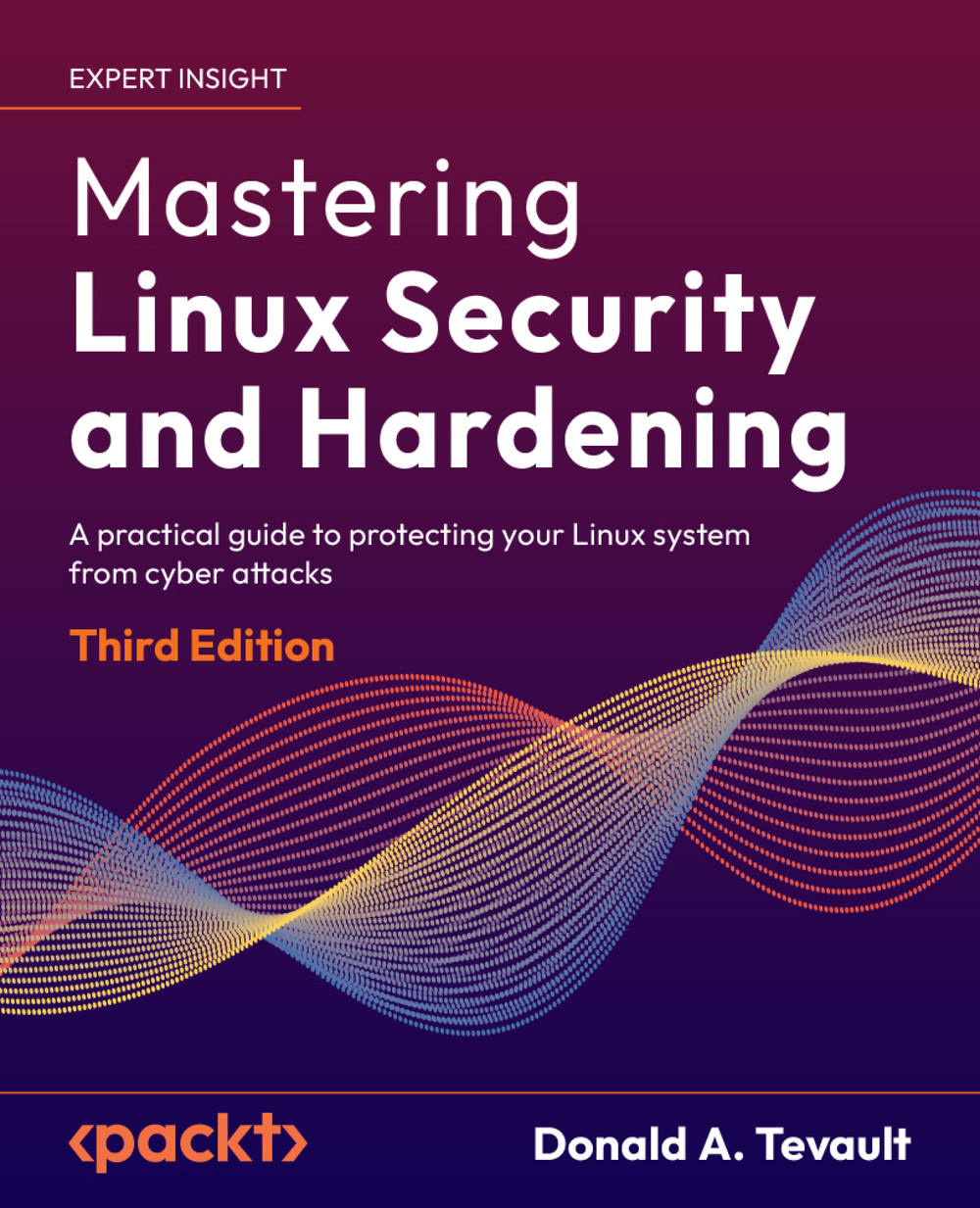
Mastering Linux Security and Hardening – Third Edition

Third Edition Copyright © 2023 Packt Publishing

ISBN: 978-1-83763-051-6

This comprehensive guide dives deep into cutting-edge Linux security techniques to protect systems from cyber threats. By reading, you’ll confidently configure secure systems, apply advanced hardening methods, and master contemporary tools and best practices.

What this Book will help me do

  • Understand how to set up secure Linux servers resilient to attacks.
  • Implement user access permissions to safeguard sensitive data.
  • Configure and secure networks and firewalls on Linux systems.
  • Learn security auditing techniques to maintain system integrity.
  • Harden Linux kernels and utilize system monitoring for enhanced security.

Who is it for?

This book is ideal for Linux administrators and network engineers looking to secure Linux systems robustly. A basic knowledge of Linux commands will help readers fully benefit from the book. It is also a great resource for security consultants wanting to focus on Linux system security.

Posted on

Mastering Windows Security and Hardening – Second Edition

Copyright © 2022 Packt Publishing

ISBN: 978-1-80323-654-4

A comprehensive guide to administering and protecting the latest Windows 11 and Windows Server 2022 from the complex cyber threats

Key Features

  • Learn to protect your Windows environment using zero-trust and a multi-layered security approach
  • Implement security controls using Intune, Configuration Manager, Defender for Endpoint, and more
  • Understand how to onboard modern cyber-threat defense solutions for Windows clients

Book Description

Are you looking for the most current and effective ways to protect Windows-based systems from being compromised by intruders? This updated second edition is a detailed guide that helps you gain the expertise to implement efficient security measures and create robust defense solutions using modern technologies.

The first part of the book covers security fundamentals with details around building and implementing baseline controls. As you advance, you’ll learn how to effectively secure and harden your Windows-based systems through hardware, virtualization, networking, and identity and access management (IAM). The second section will cover administering security controls for Windows clients and servers with remote policy management using Intune, Configuration Manager, Group Policy, Defender for Endpoint, and other Microsoft 365 and Azure cloud security technologies. In the last section, you’ll discover how to protect, detect, and respond with security monitoring, reporting, operations, testing, and auditing.

By the end of this book, you’ll have developed an understanding of the processes and tools involved in enforcing security controls and implementing zero-trust security principles to protect Windows systems.

What you will learn

  • Build a multi-layered security approach using zero-trust concepts
  • Explore best practices to implement security baselines successfully
  • Get to grips with virtualization and networking to harden your devices
  • Discover the importance of identity and access management
  • Explore Windows device administration and remote management
  • Become an expert in hardening your Windows infrastructure
  • Audit, assess, and test to ensure controls are successfully applied and enforced
  • Monitor and report activities to stay on top of vulnerabilities

Who this book is for

If you’re a cybersecurity or technology professional, solutions architect, systems engineer, systems administrator, or anyone interested in learning how to secure the latest Windows-based systems, this book is for you. A basic understanding of Windows security concepts, Intune, Configuration Manager, Windows PowerShell, and Microsoft Azure will help you get the best out of this book.

Posted on

Cybersecurity Architect’s Handbook

Copyright © 2024 Packt Publishing

ISBN 978-1-80323-584-4

Discover the ins and outs of cybersecurity architecture with this handbook, designed to enhance your expertise in implementing and maintaining robust security structures for the ever-evolving digital landscape

Key Features

  • Gain insights into the cybersecurity architect role and master key skills to excel in it
  • Acquire a diverse skill set for becoming a cybersecurity architect through up-to-date, practical examples
  • Discover valuable tips and best practices to launch your career in cybersecurity
  • Purchase of the print or Kindle book includes a free PDF eBook

Book Description

Stepping into the role of a Cybersecurity Architect (CSA) is no mean feat, as it requires both upskilling and a fundamental shift in the way you view cybersecurity altogether. Cybersecurity Architect’s Handbook is an all-encompassing guide, introducing the essential skills for aspiring CSAs, outlining a path for cybersecurity engineers and newcomers to evolve into architects, and sharing best practices to enhance the skills of existing CSAs.

Following a brief introduction to the role and foundational concepts, this book will help you understand the day-to-day challenges faced by CSAs, supported by practical examples. You’ll gain insights into assessing and improving your organization’s security posture, concerning system, hardware, and software security. You’ll also get to grips with setting user and system policies and protocols through effective monitoring and enforcement, along with understanding countermeasures that protect the system from unauthorized access attempts.

To prepare you for the road ahead and augment your existing skills, the book provides invaluable tips and practices that will contribute to your success as a CSA. By the end of this book, you’ll be well-equipped to take up the CSA role and execute robust security solutions.

What you will learn

  • Get to grips with the foundational concepts and basics of cybersecurity
  • Understand cybersecurity architecture principles through scenario-based examples
  • Navigate the certification landscape and understand key considerations for getting certified
  • Implement zero-trust authentication with practical examples and best practices
  • Find out how to choose commercial and open source tools
  • Address architecture challenges, focusing on mitigating threats and organizational governance

Who this book is for

This book is for cybersecurity professionals looking to transition into a cybersecurity architect role. Solution architects interested in understanding the scope of the role and the necessary skills for success will also find this book useful.