Posted on

Linux Pocket Guide, 4th Edition

ISBN: 9781098157968

[Practice Files] https://linuxpocketguide.com/LPG4.tar.gz

If you use Linux in your day-to-day work, then Linux Pocket Guide is the perfect on-the-job reference. This thoroughly updated 20th anniversary edition explains more than 200 Linux commands, including new commands for file handling, package management, version control, file format conversions, and more.

In this concise guide, author Daniel Barrett provides the most useful Linux commands grouped by functionality. Whether you’re a novice or an experienced user, this practical book is an ideal reference for the most important Linux commands.

You’ll learn:

  • Essential concepts—commands, shells, users, and the filesystem
  • File commands-creating, organizing, manipulating, and processing files of all kinds
  • Sysadmin basics-superusers, processes, user management, and software installation
  • Filesystem maintenance-disks, RAID, logical volumes, backups, and more
  • Networking commands-working with hosts, network connections, email, and the web
  • Getting stuff done-everything from math to version control to graphics and audio
Posted on

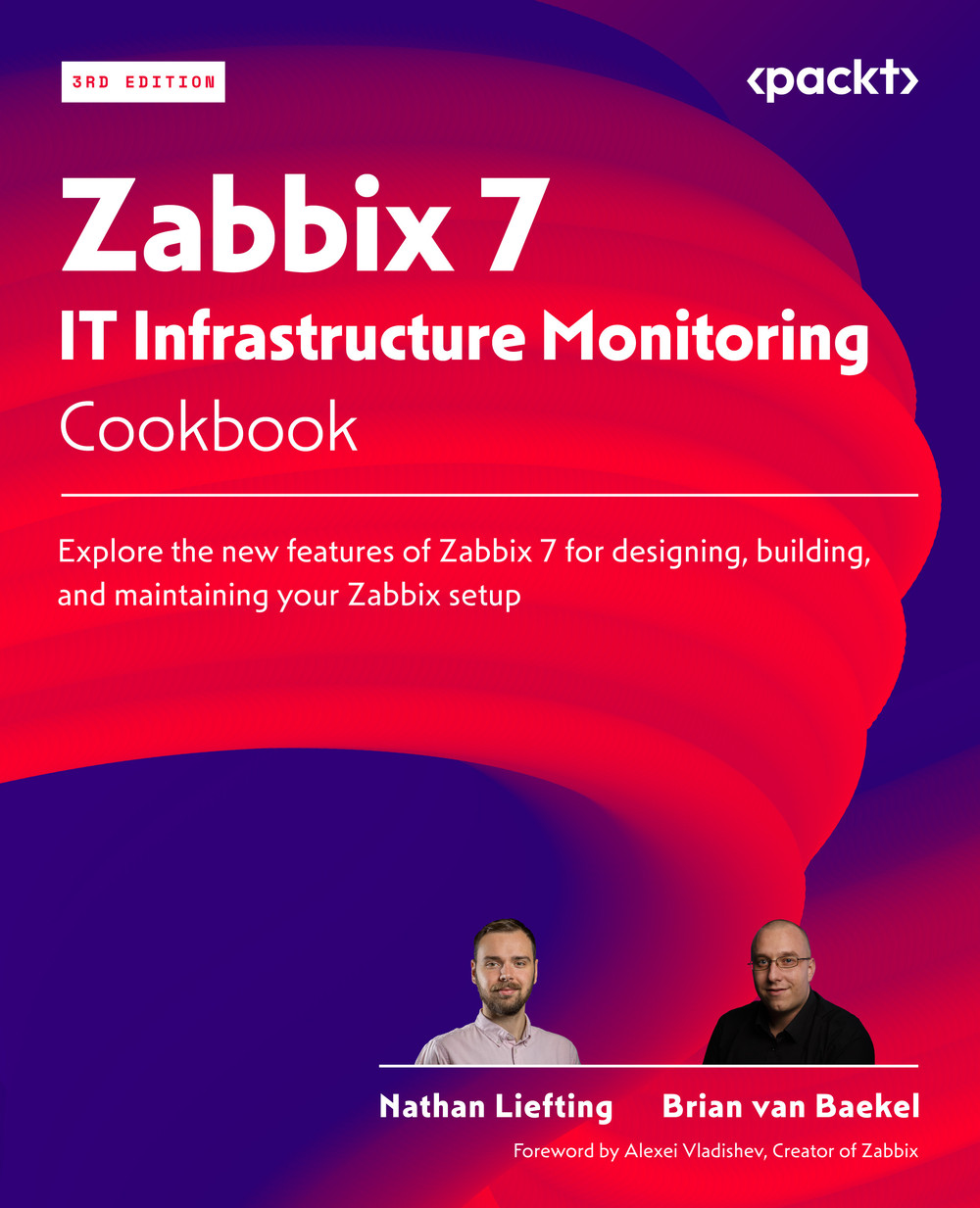
Zabbix 7 IT Infrastructure Monitoring Cookbook – Third Edition

Copyright © 2024 Packt Publishing

ISBN: 978-1-80107-832-0

Dive into the extensive capabilities of Zabbix 7 with the Zabbix 7 IT Infrastructure Monitoring Cookbook. This comprehensive guide provides a collection of practical recipes for implementing, customizing, and maintaining a professional Zabbix monitoring infrastructure. Perfect for IT professionals, this book shows you how to use Zabbix to its full potential, leveraging its new features and scalable nature.

What this Book will help me do

  • Learn to implement high-availability configurations for Zabbix servers and proxies.
  • Understand how to use the Zabbix API for integration and customization.
  • Master advanced triggers and alerting setup to fine-tune your monitoring system.
  • Gain expertise in scaling, maintaining, and managing Zabbix for enterprise-level use.
  • Explore monitoring of modern cloud services such as AWS, Azure, and Docker containers.

Who is it for?

If you are a network or IT engineer looking to learn Zabbix, this book is for you. No prior Zabbix experience is required, but familiarity with network environments and concepts will help. Beginners will find easy-to-follow instructions for setting up a monitoring system, while intermediate practitioners can enhance their current setup with advanced techniques. Ideal for those aiming to master Zabbix for scaling network and infrastructure monitoring solutions.

Posted on

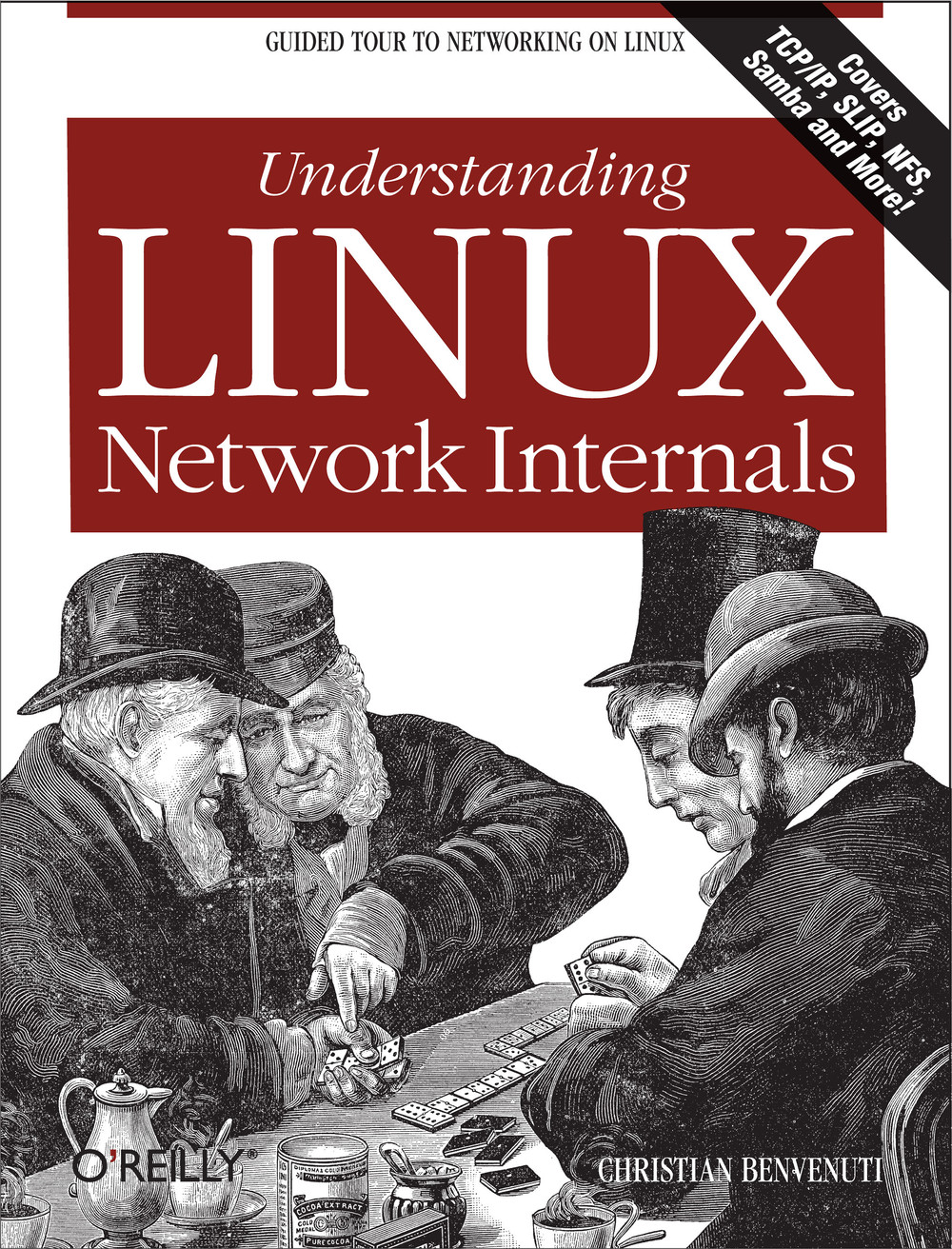
Understanding Linux Network Internals

Copyright © 2009 O’Reilly Media, Inc.

ISBN: 0-596-00255-6

If you’ve ever wondered how Linux carries out the complicated tasks assigned to it by the IP protocols — or if you just want to learn about modern networking through real-life examples — Understanding Linux Network Internals is for you.

Like the popular O’Reilly book, Understanding the Linux Kernel, this book clearly explains the underlying concepts and teaches you how to follow the actual C code that implements it. Although some background in the TCP/IP protocols is helpful, you can learn a great deal from this text about the protocols themselves and their uses. And if you already have a base knowledge of C, you can use the book’s code walkthroughs to figure out exactly what this sophisticated part of the Linux kernel is doing.

Part of the difficulty in understanding networks — and implementing them — is that the tasks are broken up and performed at many different times by different pieces of code. One of the strengths of this book is to integrate the pieces and reveal the relationships between far-flung functions and data structures. Understanding Linux Network Internals is both a big-picture discussion and a no-nonsense guide to the details of Linux networking.

Topics include:

  • Key problems with networking
  • Network interface card (NIC) device drivers
  • System initialization
  • Layer 2 (link-layer) tasks and implementation
  • Layer 3 (IPv4) tasks and implementation
  • Neighbor infrastructure and protocols (ARP)
  • Bridging
  • Routing
  • ICMP
Posted on

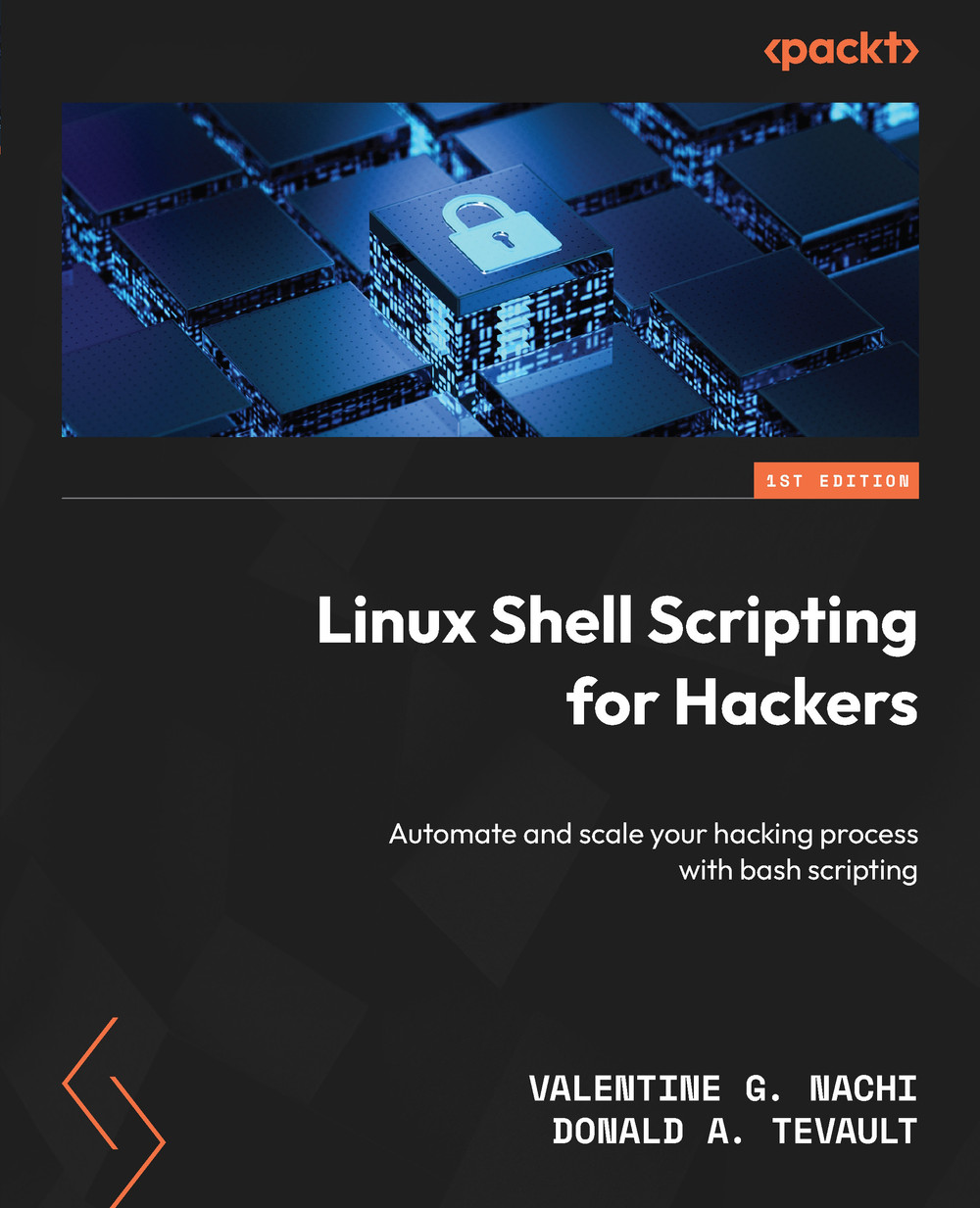
Linux Shell Scripting for Hackers

Copyright © 2026 Packt Publishing

ISBN: 978-1-83546-219-5

[GitHub] https://github.com/PacktPublishing/Linux-Shell-Scripting-for-Hackers

“Linux Shell Scripting for Hackers” equips cybersecurity professionals and ethical hackers with the necessary skills to master Bash scripting. This book provides practical guidance for automating reconnaissance, exploitation, and post-exploitation tasks, empowering readers to create custom tools and streamline workflows.

What this Book will help me do

  • Automate ethical hacking processes with customized Bash scripts.
  • Utilize tools like awk, sed, and grep for efficient data processing.
  • Design resilient scripts for system hardening and optimization.
  • Improve penetration testing pipelines through scripting integrations.
  • Gain practical expertise via real-world hacking scenarios and case studies.

Who is it for?

This book is ideal for cybersecurity enthusiasts, ethical hackers, and professionals seeking to elevate their scripting skills. Targeted towards those with a basic understanding of Linux systems and Bash scripting concepts, it also appeals to experienced penetration testers aiming to enhance their automation capabilities.

Posted on

Digital Forensics Cookbook

Copyright © 2026 Packt Publishing

ISBN: 978-1-80512-755-0

[GitHub] https://github.com/PacktPublishing/Digital-Forensics-Cookbook

Learn the workflows professionals use to triage systems, uncover hidden activity, recover deleted evidence, crack encrypted containers, analyze Windows memory, and detect tampering using realistic hands-on forensic datasets.

Key Features

  • Master field-tested workflows for triage, acquisition, and cross-platform analysis
  • Uncover hidden activity, recover evidence, defeat encryption, and detect tampering
  • Build hands-on investigation skills using realistic datasets across major platforms
  • Purchase of the print or Kindle book includes a free PDF ebook

Book Description

Modern investigations and incident response efforts live and die by digital evidence. Digital Forensics Cookbook uses realistic datasets and practical workflows drawn from real investigations to uncover the truth hidden inside computers, mobile devices, and online accounts.

Rather than focusing on theory alone, this book moves you through the investigative process from triage and acquisition to artifact analysis, memory forensics, encryption challenges, malware triage, and detecting anti-forensic behavior. Along the way, you’ll perform remote artifact collection, analyze evidence across Windows, macOS, Linux, iOS, and Android systems, investigate cloud-synced accounts, recover deleted data, manually carve evidence when tools fail, and identify attempts to hide or manipulate data.

As you progress through the book, you’ll learn how to write and apply regular expressions and SQLite queries, build system timelines, baseline systems, automate analysis, verify findings across independent sources, generate custom password dictionaries to crack encrypted containers, detect metadata tampering designed to mislead investigators, and analyze Windows memory. By the end, you won’t just know how to run forensic tools; you’ll understand how investigators think, enabling you to turn scattered digital traces into clear, defensible conclusions.

What you will learn

  • Perform triage and acquire evidence during live investigations
  • Collect artifacts remotely using incident response workflows
  • Analyze evidence across Windows, macOS, Linux, iOS, and Android
  • Recover deleted data and manually carve evidence when tools fail
  • Crack encrypted containers using custom password dictionaries
  • Use regex and SQLite queries to uncover hidden investigative clues
  • Detect anti-forensic techniques and metadata tampering
  • Analyze Windows memory using Volatility to uncover live artifacts

Who this book is for

This book is for digital forensic investigators, incident responders, and security professionals who want to build practical investigation skills using real-world workflows and realistic datasets. It’s also ideal for students and analysts entering the field who want hands-on experience recovering evidence, analyzing artifacts, and thinking like an investigator.