Posted on

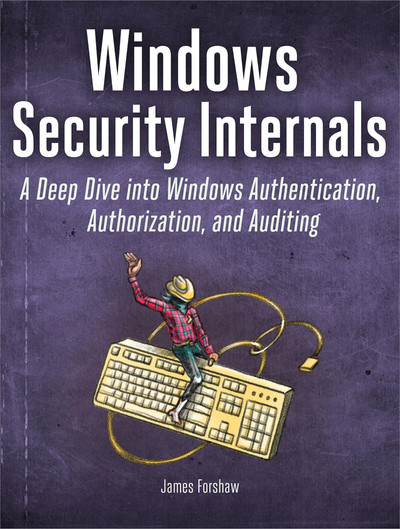
Windows Security Internals

book cover

Copyright © 2024 by James Forshaw

ISBN-13: 978-1-7185-0198-0 (print)
ISBN-13: 978-1-7185-0199-7 (ebook)

Windows Security Internals is a must-have for anyone needing to understand the Windows operating system’s low-level implementations, whether to discover new vulnerabilities or protect against known ones. Developers, devops, and security researchers will all find unparalleled insight into the operating system’s key elements and weaknesses, surpassing even Microsoft’s official documentation.

Author James Forshaw teaches through meticulously crafted PowerShell examples that can be experimented with and modified, covering everything from basic resource security analysis to advanced techniques like using network authentication. The examples will help you actively test and manipulate system behaviors, learn how Windows secures files and the registry, re-create from scratch how the system grants access to a resource, learn how Windows implements authentication both locally and over a network, and much more.

You’ll also explore a wide range of topics, such as:

  • Windows security architecture, including both the kernel and user-mode applications
  • The Windows Security Reference Monitor (SRM), including access tokens, querying and setting a resource’s security descriptor, and access checking and auditing
  • Interactive Windows authentication and credential storage in the Security Account Manager (SAM) and Active Directory
  • Mechanisms of network authentication protocols, including NTLM and Kerberos

In an era of sophisticated cyberattacks on Windows networks, mastering the operating system’s complex security mechanisms is more crucial than ever. Whether you’re defending against the latest cyber threats or delving into the intricacies of Windows security architecture, you’ll find Windows Security Internals indispensable in your efforts to navigate the complexities of today’s cybersecurity landscape.
Posted on

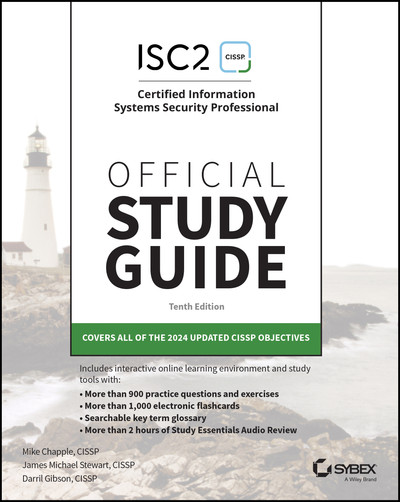
ISC2 CISSP Certified Information Systems Security Professional Official Study Guide, 10th Edition

book cover

Copyright © 2024 by John Wiley & Sons, Inc. All rights reserved.

ISBNs: 9781394254699 (paperback), 9781394254712 (ePDF), 9781394254705 (ePub)

ISC2 Certified Information Systems Security Professional (CISSP) Official Study Guide, 10th Edition has been completely updated based on the latest 2024 CISSP Detailed Content Outline. This bestselling Sybex Study Guide covers 100% of the CISSP objectives. You’ll prepare smarter and faster with Sybex thanks to expert content, knowledge from our real-world experience, access to the Sybex online interactive learning environment, and much more. Reinforce what you’ve learned with key topic Study Essentials and chapter review questions.

The book’s co-authors bring decades of experience as cybersecurity practitioners and educators, integrating real-world expertise with the practical knowledge you’ll need to successfully prove your CISSP mastery. Combined, they’ve taught cybersecurity concepts to millions of students through their books, video courses, and live training programs.

Along with the book, you also get access to Sybex’s superior online interactive learning environment that includes:

  • Over 900 practice test questions with complete answer explanations. This includes all of the questions from the book plus four additional online-only practice exams, each with 125 unique questions. You can use the online-only practice exams as full exam simulations. Our questions will help you identify where you need to study more.
  • More than 1000 Electronic Flashcards to reinforce your learning and give you last-minute test prep 
  • A searchable glossary in PDF to give you instant access to the key terms you need to know 
  • Audio Review. Author Mike Chapple reads the Study Essentials for each chapter providing you with more than 2 hours of up-to-date audio review for yet another way to reinforce your knowledge as you prepare.

Coverage of all of the CISSP topics in the book means you’ll be ready for:

  • Security and Risk Management
  • Asset Security
  • Security Architecture and Engineering
  • Communication and Network Security
  • Identity and Access Management (IAM)
  • Security Assessment and Testing
  • Security Operations
  • Software Development Security