Posted on

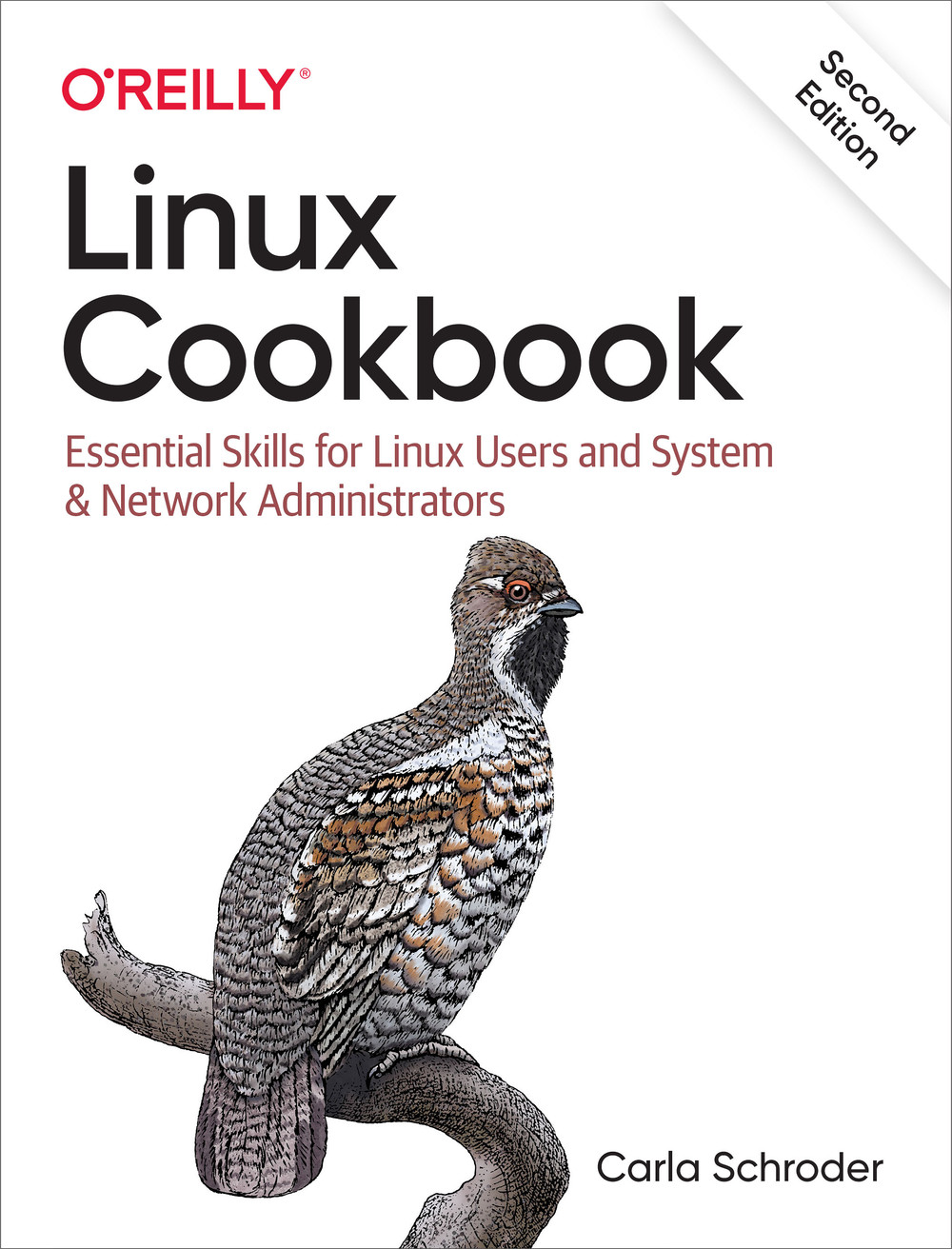
Linux Cookbook, 2nd Edition

Copyright © 2021 Carla Schroder. All rights reserved.

ISBN: 978-1-492-08716-8

This handy cookbook teaches new-to-intermediate Linux users the essential skills necessary to manage a Linux system, using both graphical and command-line tools. Whether you run Linux in embedded, desktop, server, or cloud or virtual environments, the fundamental skills are the same. This book aims to get you up and running quickly, with copy-paste examples.

Carla Schroder provides recipes that cover specific problems, with discussions that explain how each recipe works, as well as references for additional study.

You’ll learn how to:

  • Use systemd, the new comprehensive service manager
  • Build simple or complex firewalls with firewalld
  • Set up secure network connections for Linux systems and mobile devices
  • Rescue nonbooting systems
  • Reset lost passwords on Linux and Windows
  • Use dnsmasq to simplify managing your LAN name services
  • Manage users and groups and control access to files
  • Probe your computer hardware and monitor hardware health
  • Manage the GRUB bootloader and multiboot Linux and Windows
  • Keep accurate time across your network with the newest tools
  • Build an internet router/firewall on Raspberry Pi
  • Manage filesystems and partitioning
Posted on

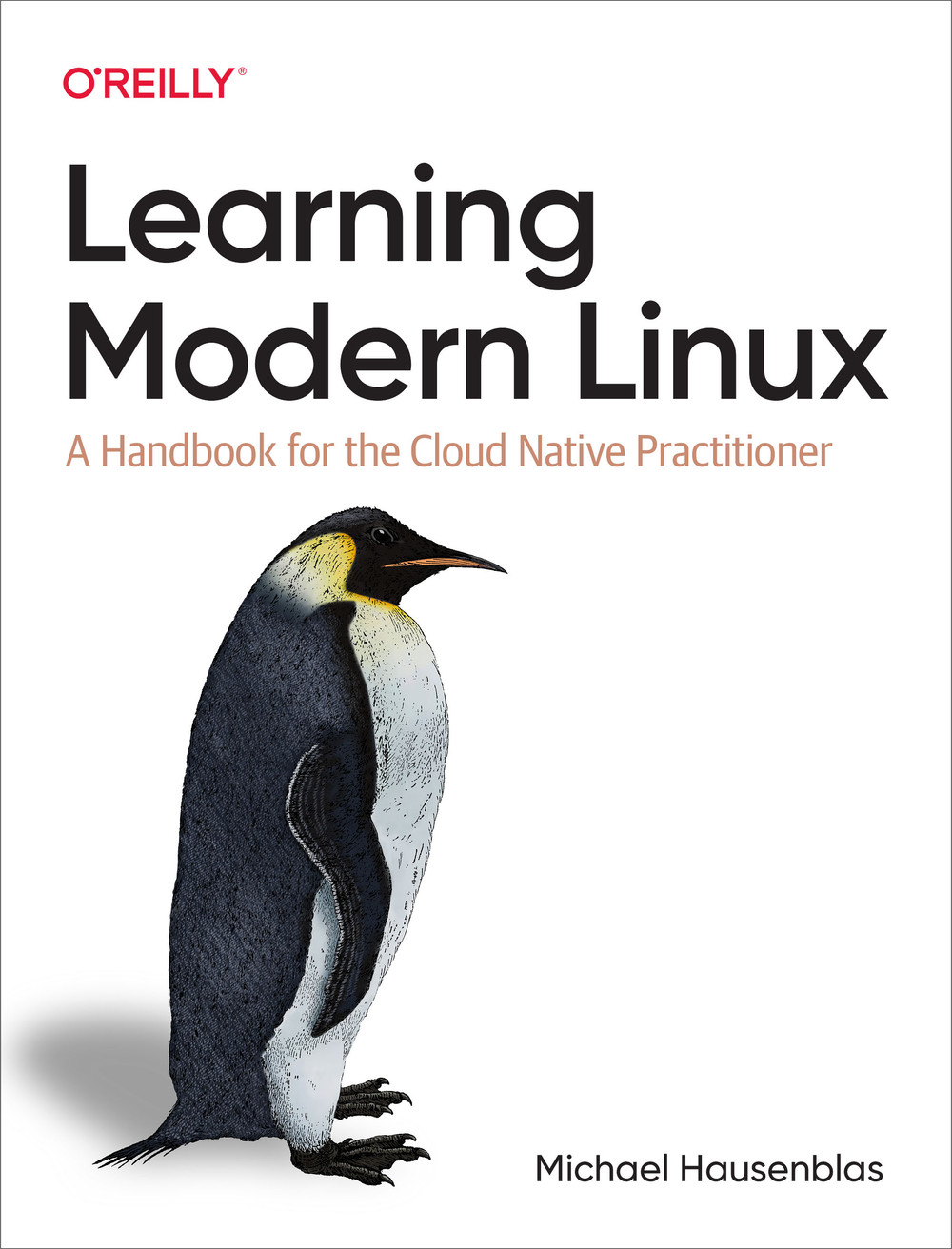
Learning Modern Linux

Copyright © 2022 Michael Hausenblas. All rights reserved.

ISBN: 978-1-098-10894-6

[GitHub] https://github.com/mhausenblas/modern-linux.info

If you use Linux in development or operations and need a structured approach to help you dive deeper, this book is for you. Author Michael Hausenblas also provides tips and tricks for improving your workflow with this open source operating system. Whether you’re a developer, software architect, or site reliability engineer, this hands-on guide focuses on ways to use Linux for your everyday needs, from development to office-related tasks.

Along the way, you’ll gain hands-on experience with modern Linux terminals and shells, and learn how to manage your workloads. You’ll understand how to run Linux applications by using containers, systemd, modern filesystems, and immutable distros such as Flatcar and Bottlerocket.

  • Use Linux as a modern work environment, rather than just from an admin perspective
  • Learn critical components such as the Linux kernel, terminal multiplexer, human-friendly shells, and portable shell scripting
  • Become familiar with access control, from file permissions to capabilities, and understand the role of filesystems as a fundamental building block
  • Learn about application dependency management and containers
  • Gain hands-on experience with the Linux networking stack and tooling, including DNS
  • Apply modern operating system observability to manage your workloads
  • Become familiar with interprocess communication, virtual machines, and selected security topics
Posted on

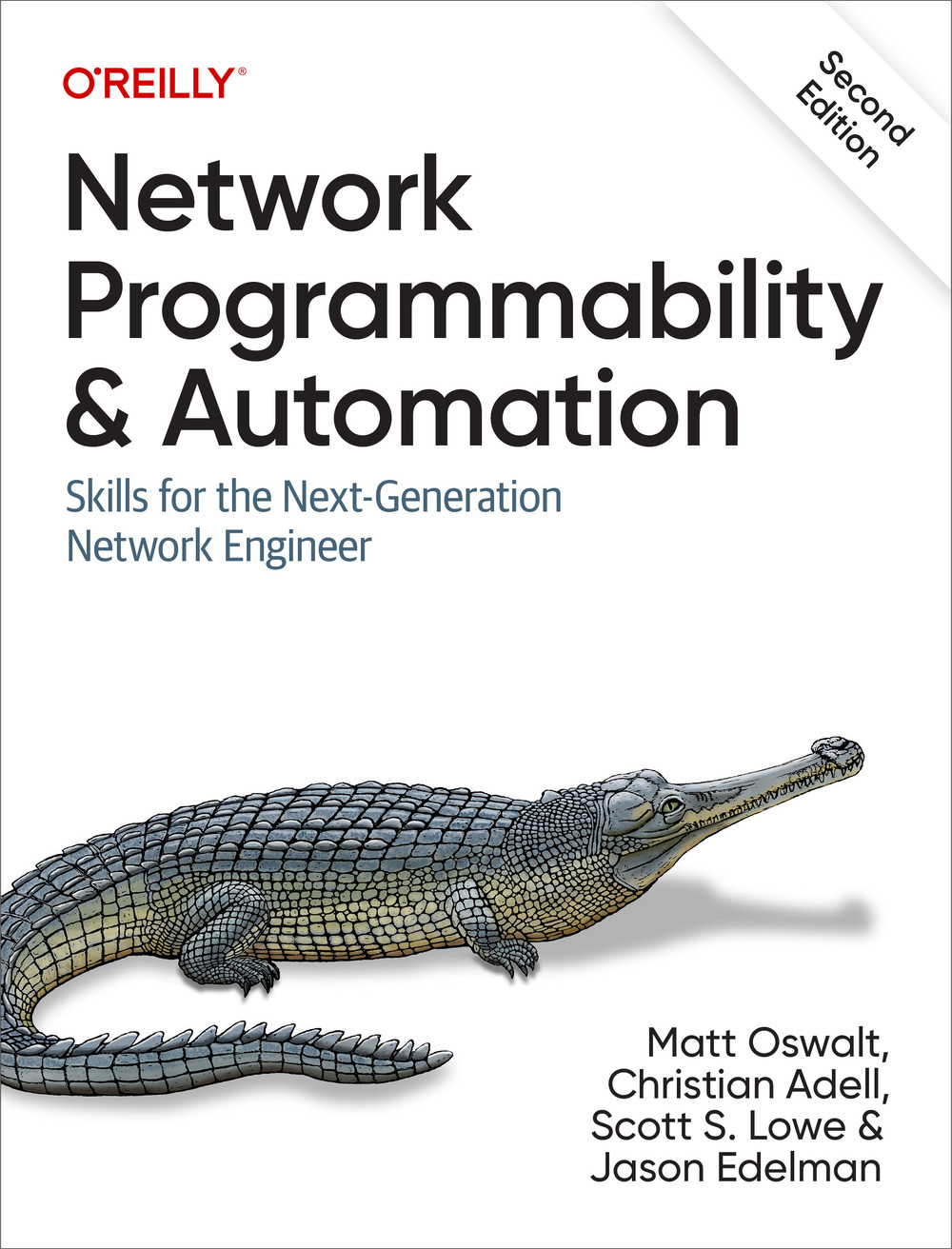
Network Programmability and Automation, 2nd Edition

Copyright © 2023 Matt Oswalt, Scott S. Lowe, and Christian Adell. All rights reserved.

ISBN: 978-1-098-11083-3

[GitHub] https://oreilly-npa-book.github.io/

[GitHub] https://github.com/oreilly-npa-book/examples/tree/v2

Network engineers are finding it harder than ever to rely solely on manual processes to get their jobs done. New protocols, technologies, delivery models, and the need for businesses to become more agile and flexible have made network automation essential. The updated second edition of this practical guide shows network engineers how to use a range of technologies and tools, including Linux, Python, APIs, and Git, to automate systems through code. This edition also includes brand new topics such as network development environments, cloud, programming with Go, and a reference network automation architecture.

Network Programmability and Automation will help you automate tasks involved in configuring, managing, and operating network equipment, topologies, services, and connectivity. Through the course of the book, you’ll learn the basic skills and tools you need to make this critical transition.

You’ll learn:

  • Programming skills with Python and Go: data types, conditionals, loops, functions, and more
  • New Linux-based networking technologies and cloud native environments, and how to use them to bootstrap development environments for your network projects
  • Data formats and models: JSON, XML, YAML, Protobuf, and YANG
  • Jinja templating for creating network device configurations
  • A holistic approach to architecting network automation services
  • The role of application programming interfaces (APIs) in network automation
  • Source control with Git to manage code changes during the automation process
  • Cloud-native technologies like Docker and Kubernetes
  • How to automate network devices and services using Ansible, Nornir, and Terraform
  • Tools and technologies for developing and continuously integrating network automation
Posted on

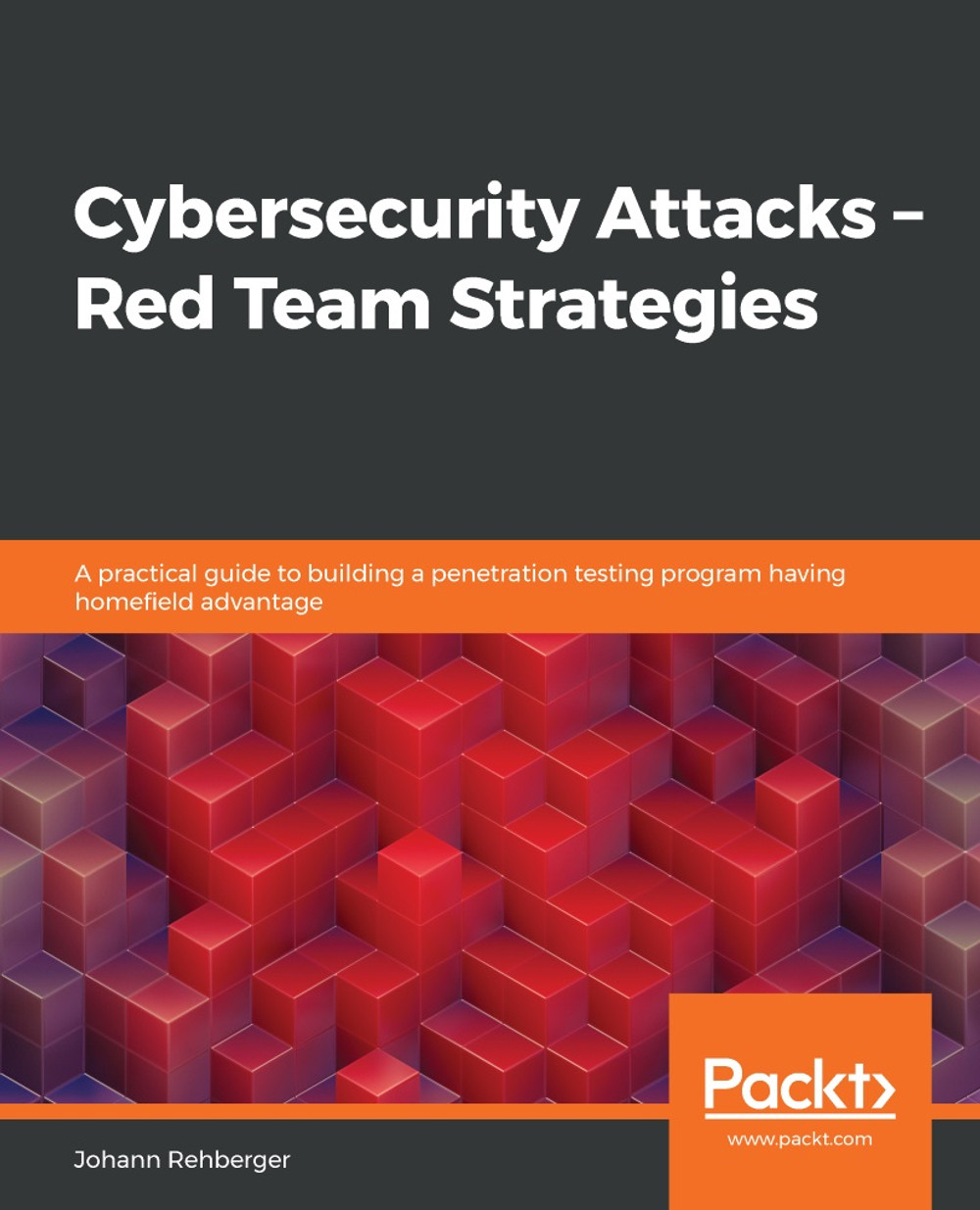
Cybersecurity Attacks – Red Team Strategies

Copyright © 2020 Packt Publishing

ISBN: 978-1-83882-886-8

[GitHub] https://github.com/PacktPublishing/Cybersecurity-Attacks-Red-Team-Strategies

Cybersecurity Attacks: Red Team Strategies provides a comprehensive guide to building and enhancing an internal penetration testing program with an emphasis on applying real-world offensive techniques. The content is designed to help readers adopt the red team mindset and strategies, improving security response and organizational defense.

What this Book will help me do

  • Understand how to set up and manage a penetration testing program effectively.
  • Learn techniques for hunting and tracking credentials with practical tools.
  • Master the use of knowledge graphs for mapping an organization’s security landscape.
  • Gain insights into automation techniques for enhancing red team operations.
  • Discover methods for employing traps and decoys to strengthen security measures.

Who is it for?

This book is tailored for penetration testers, cybersecurity analysts, and red team professionals eager to enhance their skills. It appeals to security managers and CISOs who aim to improve their organization’s defense by leveraging red teaming techniques. Beginners with a foundational understanding of penetration testing will find it a practical learning resource, while experienced practitioners will expand their toolkit with advanced methods.