Posted on

Mastering Linux Security and Hardening – Third Edition

Third Edition Copyright © 2023 Packt Publishing

ISBN: 978-1-83763-051-6

This comprehensive guide dives deep into cutting-edge Linux security techniques to protect systems from cyber threats. By reading, you’ll confidently configure secure systems, apply advanced hardening methods, and master contemporary tools and best practices.

What this Book will help me do

  • Understand how to set up secure Linux servers resilient to attacks.
  • Implement user access permissions to safeguard sensitive data.
  • Configure and secure networks and firewalls on Linux systems.
  • Learn security auditing techniques to maintain system integrity.
  • Harden Linux kernels and utilize system monitoring for enhanced security.

Who is it for?

This book is ideal for Linux administrators and network engineers looking to secure Linux systems robustly. A basic knowledge of Linux commands will help readers fully benefit from the book. It is also a great resource for security consultants wanting to focus on Linux system security.
Posted on

Learning Kali Linux, 2nd Edition

Copyright © 2024 Ric Messier. All rights reserved.

ISBN: 978-1-098-15413-4

With hundreds of tools preinstalled, the Kali Linux distribution makes it easier for security professionals to get started with security testing quickly. But with more than 600 tools in its arsenal, Kali Linux can also be overwhelming. The new edition of this practical book covers updates to the tools, including enhanced coverage of forensics and reverse engineering.

Author Ric Messier also goes beyond strict security testing by adding coverage on performing forensic analysis, including disk and memory forensics, as well as some basic malware analysis.

  • Explore the breadth of tools available on Kali Linux
  • Understand the value of security testing and examine the testing types available
  • Learn the basics of penetration testing through the entire attack lifecycle
  • Install Kali Linux on multiple systems, both physical and virtual
  • Discover how to use different security-focused tools
  • Structure a security test around Kali Linux tools
  • Extend Kali tools to create advanced attack techniques
  • Use Kali Linux to generate reports once testing is complete
Posted on

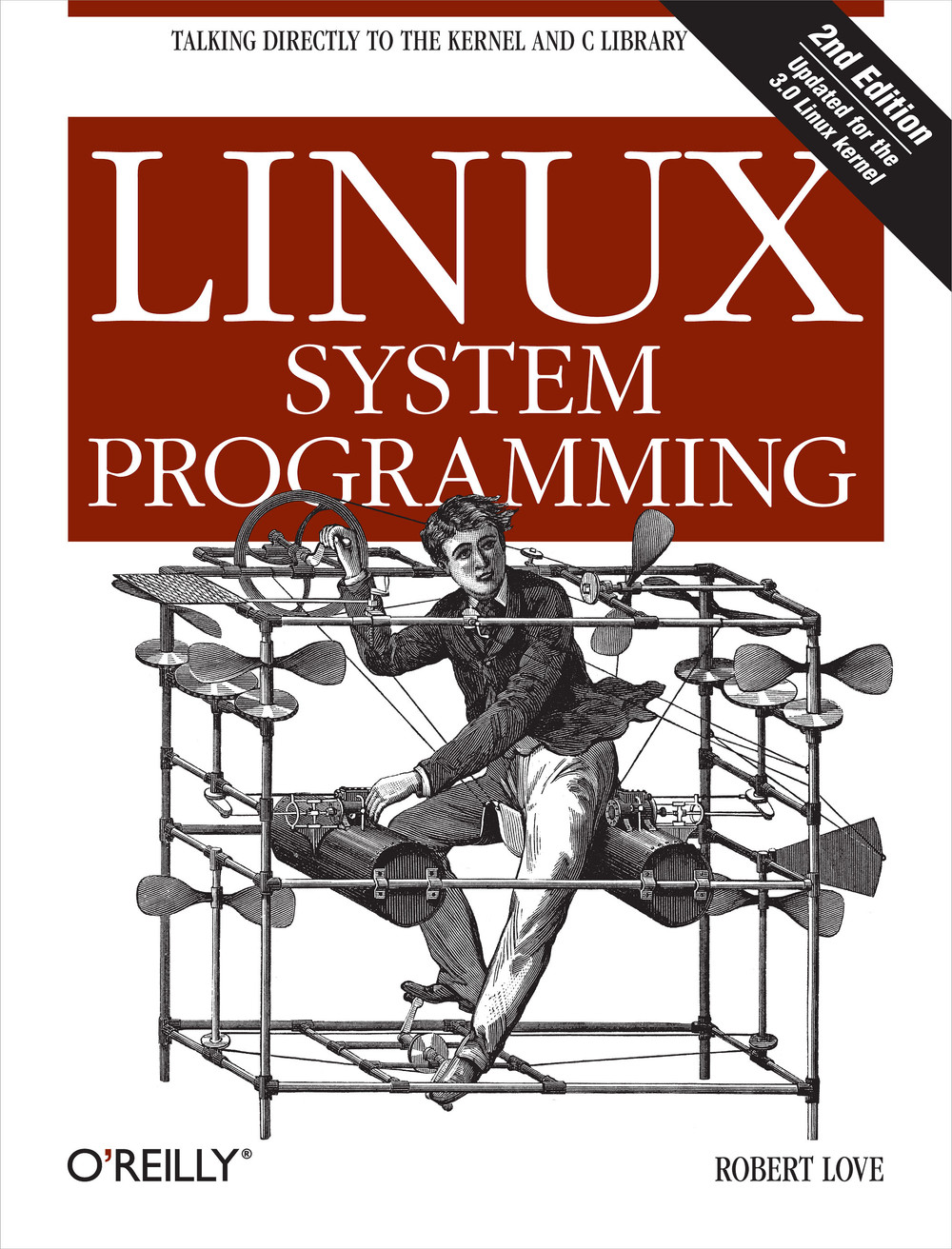
Linux System Programming, 2nd Edition

Copyright 2013 Robert Love

ISBN: 978-1-449-33953-1

Write software that draws directly on services offered by the Linux kernel and core system libraries. With this comprehensive book, Linux kernel contributor Robert Love provides you with a tutorial on Linux system programming, a reference manual on Linux system calls, and an insider’s guide to writing smarter, faster code.

Love clearly distinguishes between POSIX standard functions and special services offered only by Linux. With a new chapter on multithreading, this updated and expanded edition provides an in-depth look at Linux from both a theoretical and applied perspective over a wide range of programming topics, including:

  • A Linux kernel, C library, and C compiler overview
  • Basic I/O operations, such as reading from and writing to files
  • Advanced I/O interfaces, memory mappings, and optimization techniques
  • The family of system calls for basic process management
  • Advanced process management, including real-time processes
  • Thread concepts, multithreaded programming, and Pthreads
  • File and directory management
  • Interfaces for allocating memory and optimizing memory access
  • Basic and advanced signal interfaces, and their role on the system
  • Clock management, including POSIX clocks and high-resolution timers
Posted on

Understanding the Linux Kernel, 3rd Edition

Copyright © 2008 O’Reilly Media, Inc.

In order to thoroughly understand what makes Linux tick and why it works so well on a wide variety of systems, you need to delve deep into the heart of the kernel. The kernel handles all interactions between the CPU and the external world, and determines which programs will share processor time, in what order. It manages limited memory so well that hundreds of processes can share the system efficiently, and expertly organizes data transfers so that the CPU isn’t kept waiting any longer than necessary for the relatively slow disks.

The third edition of Understanding the Linux Kernel takes you on a guided tour of the most significant data structures, algorithms, and programming tricks used in the kernel. Probing beyond superficial features, the authors offer valuable insights to people who want to know how things really work inside their machine. Important Intel-specific features are discussed. Relevant segments of code are dissected line by line. But the book covers more than just the functioning of the code; it explains the theoretical underpinnings of why Linux does things the way it does.

This edition of the book covers Version 2.6, which has seen significant changes to nearly every kernel subsystem, particularly in the areas of memory management and block devices. The book focuses on the following topics:

  • Memory management, including file buffering, process swapping, and Direct memory Access (DMA)
  • The Virtual Filesystem layer and the Second and Third Extended Filesystems
  • Process creation and scheduling
  • Signals, interrupts, and the essential interfaces to device drivers
  • Timing
  • Synchronization within the kernel
  • Interprocess Communication (IPC)
  • Program execution

Understanding the Linux Kernel will acquaint you with all the inner workings of Linux, but it’s more than just an academic exercise. You’ll learn what conditions bring out Linux’s best performance, and you’ll see how it meets the challenge of providing good system response during process scheduling, file access, and memory management in a wide variety of environments. This book will help you make the most of your Linux system.

Posted on

Learning Modern Linux

Copyright © 2022 Michael Hausenblas. All rights reserved.

ISBN: 978-1-098-10894-6

[GitHub] https://github.com/mhausenblas/modern-linux.info

If you use Linux in development or operations and need a structured approach to help you dive deeper, this book is for you. Author Michael Hausenblas also provides tips and tricks for improving your workflow with this open source operating system. Whether you’re a developer, software architect, or site reliability engineer, this hands-on guide focuses on ways to use Linux for your everyday needs, from development to office-related tasks.

Along the way, you’ll gain hands-on experience with modern Linux terminals and shells, and learn how to manage your workloads. You’ll understand how to run Linux applications by using containers, systemd, modern filesystems, and immutable distros such as Flatcar and Bottlerocket.

  • Use Linux as a modern work environment, rather than just from an admin perspective
  • Learn critical components such as the Linux kernel, terminal multiplexer, human-friendly shells, and portable shell scripting
  • Become familiar with access control, from file permissions to capabilities, and understand the role of filesystems as a fundamental building block
  • Learn about application dependency management and containers
  • Gain hands-on experience with the Linux networking stack and tooling, including DNS
  • Apply modern operating system observability to manage your workloads
  • Become familiar with interprocess communication, virtual machines, and selected security topics