
Moodle is a Learning Management System (LMS) designed to provide educators, administrators and learners with a single robust, secure and integrated system to create personalised learning environments.
Moodle is a Learning Management System (LMS) designed to provide educators, administrators and learners with a single robust, secure and integrated system to create personalised learning environments.

Kerberoasting is a technique used by attackers to exploit the Kerberos authentication protocol in Windows environments. The attacker requests a service ticket for a service account, which is then encrypted with the service account’s password hash. The attacker can then extract the ticket and attempt to crack the password hash offline.

Microsoft Key Management Service (KMS) is a service that allows organizations to activate Microsoft software, such as Windows and Office, within their own network. It’s primarily used for volume licensing, where businesses, schools, and non-profits need to activate multiple devices.
Setting up a KMS host involves installing the Volume Activation Services role on a server, configuring the KMS host with the organization’s KMS host key, and publishing DNS records to enable client discovery.
Common KMS issues include clients not being able to discover the KMS host, activation failures, and DNS resolution problems. Troubleshooting these issues often involves checking network connectivity, DNS settings, and KMS host configuration.
Microsoft Key Management Service is a valuable tool for organizations that need to activate a large number of Microsoft software products within their network. It simplifies the activation process, provides centralized management, and helps ensure software compliance.
(2025, February 3). In Google Gemini 2.0 Flash.
Copyright © 2025 by Pearson Education, Inc.
ISBN-13: 978-0-13-822557-5
ISBN-10: 0-13-822557-5
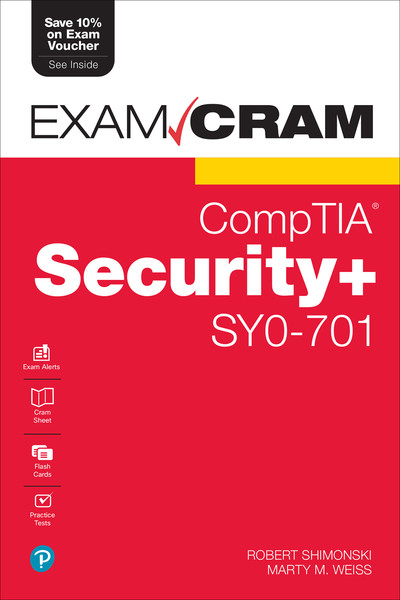
CompTIA Security+ SY0-701 Exam Cram is an all-inclusive study guide designed to help you pass the updated version of the CompTIA Security+ exam. Prepare for test day success with complete coverage of exam objectives and topics, plus hundreds of realistic practice questions. Extensive prep tools include quizzes, Exam Alerts, and our essential last-minute review Cram Sheet. The powerful Pearson Test Prep practice software provides real-time assessment and feedback with two complete exams.
Covers the critical information needed to score higher on your Security+ SY0-701 exam!
- General security concepts
- Threats, vulnerabilities, and mitigations
- Security architecture
- Security operations
- Security program management and oversight
Prepare for your exam with Pearson Test Prep
- Realistic practice questions and answers
- Comprehensive reporting and feedback
- Customized testing in study, practice exam, or flash card modes
- Complete coverage of CompTIA Security+ SY0-701 exam objectives
Copyright © 2024 by James Forshaw
ISBN-13: 978-1-7185-0198-0 (print)
ISBN-13: 978-1-7185-0199-7 (ebook)
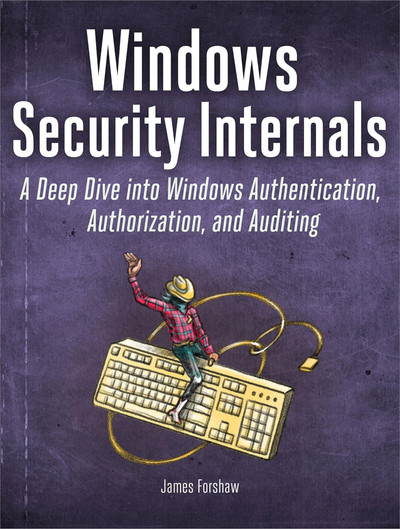
Windows Security Internals is a must-have for anyone needing to understand the Windows operating system’s low-level implementations, whether to discover new vulnerabilities or protect against known ones. Developers, devops, and security researchers will all find unparalleled insight into the operating system’s key elements and weaknesses, surpassing even Microsoft’s official documentation.
Author James Forshaw teaches through meticulously crafted PowerShell examples that can be experimented with and modified, covering everything from basic resource security analysis to advanced techniques like using network authentication. The examples will help you actively test and manipulate system behaviors, learn how Windows secures files and the registry, re-create from scratch how the system grants access to a resource, learn how Windows implements authentication both locally and over a network, and much more.
You’ll also explore a wide range of topics, such as:
- Windows security architecture, including both the kernel and user-mode applications
- The Windows Security Reference Monitor (SRM), including access tokens, querying and setting a resource’s security descriptor, and access checking and auditing
- Interactive Windows authentication and credential storage in the Security Account Manager (SAM) and Active Directory
- Mechanisms of network authentication protocols, including NTLM and Kerberos
In an era of sophisticated cyberattacks on Windows networks, mastering the operating system’s complex security mechanisms is more crucial than ever. Whether you’re defending against the latest cyber threats or delving into the intricacies of Windows security architecture, you’ll find Windows Security Internals indispensable in your efforts to navigate the complexities of today’s cybersecurity landscape.