Posted on

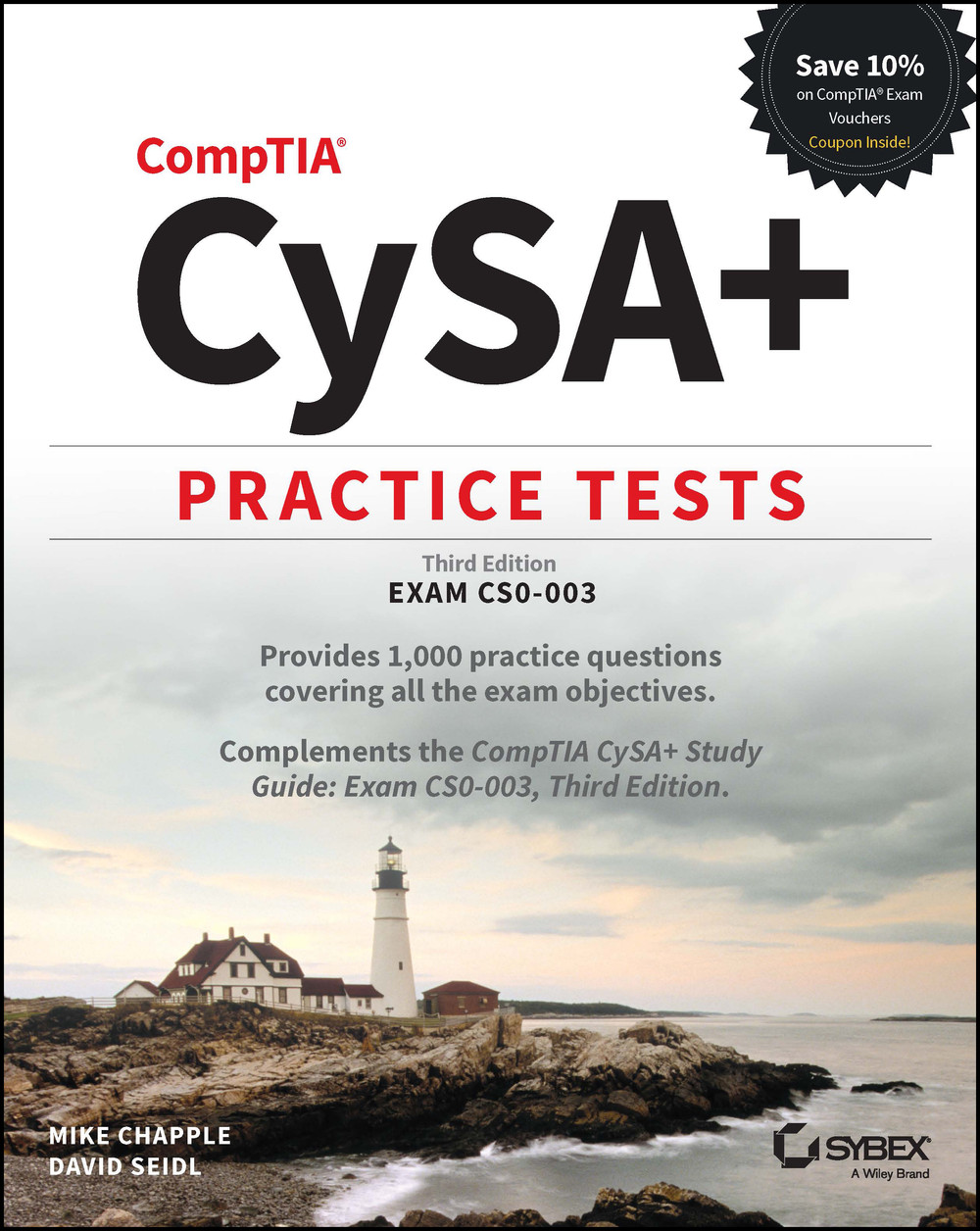
CompTIA CySA+ Practice Tests, 3rd Edition

Copyright © 2023 by John Wiley & Sons, Inc. All rights reserved.

ISBNs: 9781394182930 (paperback), 9781394182954 (ePDF), 9781394182947 (ePub)

The best way to prep for the CS0-003 CySA+ certification exam and hone your practical cybersecurity skillset

In the newly updated 3rd edition of the CompTIA CySA+ Practice Tests: Exam CS0-003, veteran information security experts and educators Mike Chapple and David Seidl deliver an effective and efficient collection of study resources for the challenging CompTIA Cybersecurity Analyst+ (CySA+) certification exam. In the book, you’ll find 1000 practice questions, complete with answers and explanations, covering every domain tested by Exam CS0-003.

You’ll hone your skills in security operations, vulnerability management, incident response and management, and reporting and communication, improving your ability to detect and respond to malicious activity on the job and dramatically increasingly your chances of success on the CySA+ exam. You’ll also get:

  • Techniques for threat hunting and the collection of threat intelligence
  • Strategies for effective incident response processes and activities, ensuring you’re able to react appropriately to cybersecurity incidents at work
  • Complimentary access to Sybex’s superior online test bank, including all the practice questions you need to review and test your knowledge before you walk into the exam room

Perfect for anyone studying for the CompTIA CySA+ CS0-003 certification exam, CompTIA CySA+ Practice Tests: Exam CS0-003, Third Edition, will also benefit IT security practitioners looking to test and improve their skillset.

Posted on

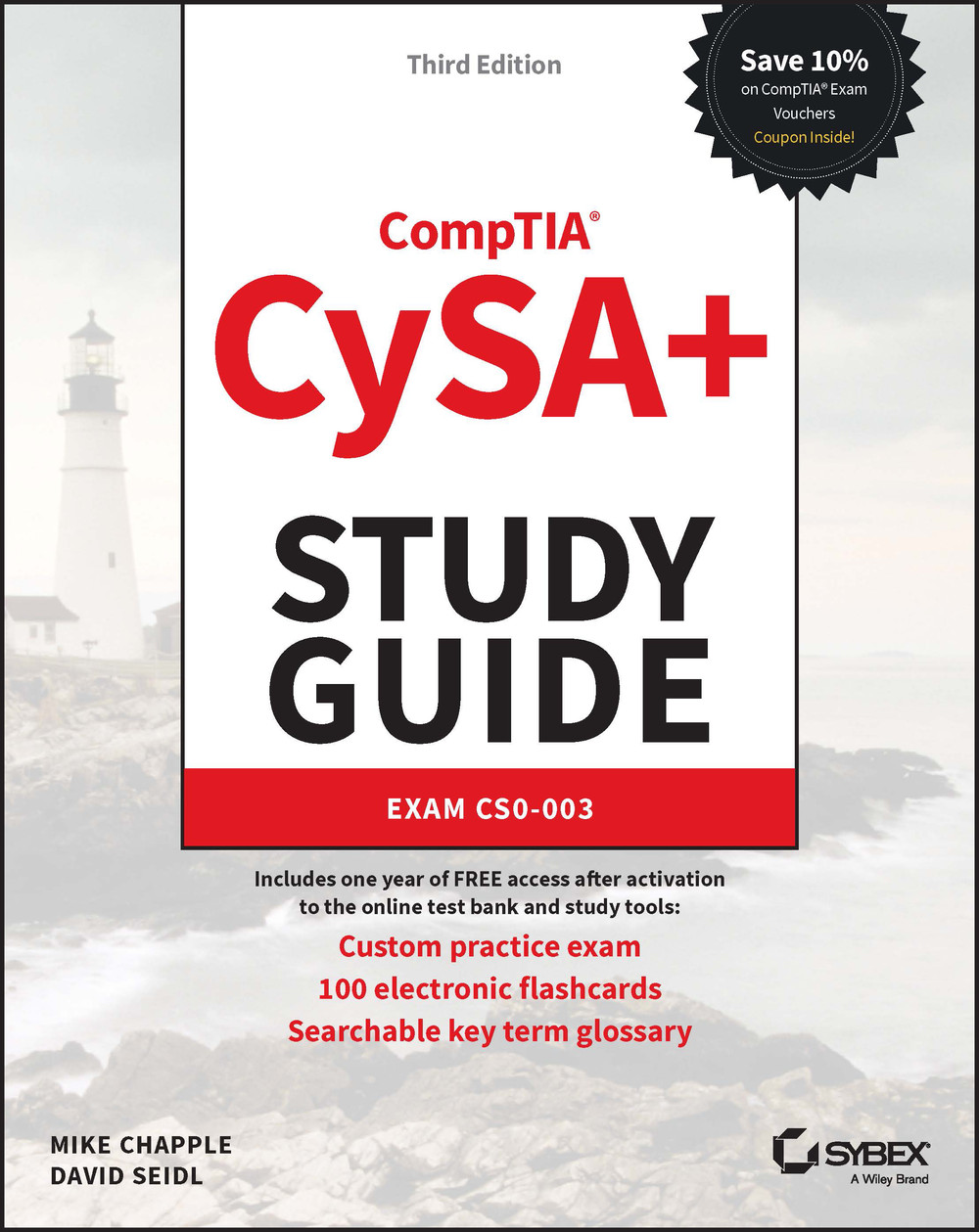
CompTIA CySA+ Study Guide, 3rd Edition

Copyright © 2023 by John Wiley & Sons, Inc. All rights reserved.

ISBNs: 9781394182909 (paperback), 9781394182923 (ePDF), 9781394182916 (ePub)

Prepare for the CompTIA CySA+ certification exam with the official and updated study guide for Exam CS0-003

In the newly revised third edition of CompTIA CySA+ Study Guide: Exam CS0-003, a team of leading security experts and tech educators delivers comprehensive and accurate coverage of every topic and domain covered on the certification exam. You’ll find clear and concise information on critical security topics presented by way of practical, real-world examples, chapter reviews, and exam highlights.

Prepare for the test and for a new role in cybersecurity with the book’s useful study tools, including:

  • Hands-on lab exercises and an opportunity to create your own cybersecurity toolkit
  • Authoritative discussions of each exam competency, including security operations, vulnerability management, incident response and management, and reporting and communication
  • Complimentary access to Wiley’s proven library of digital resources, including an online test bank, bonus questions, flashcards, glossary, and more

Reduce test anxiety and get a head-start learning the on-the-job skills you’ll need on your first day in a cybersecurity career. Or augment your existing CompTIA Security+ certification with an impressive new credential. Fully updated for the newly released CS0-003 exam, CompTIA CySA+ Study Guide: Exam CS0-003, Third Edition is an essential resource for test takers and cybersecurity professionals alike.

Posted on

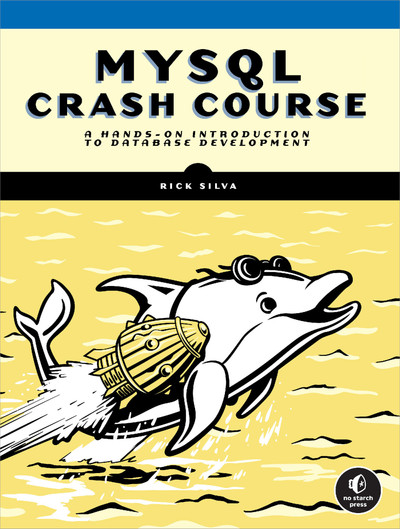
MySQL Crash Course

Copyright © 2023 by Rick Silva.

ISBN-13: 978-1-7185-0300-7 (print)
ISBN-13: 978-1-7185-0301-4 (ebook)

[GitHub] https://github.com/ricksilva/mysql_cc

MySQL Crash Course is a fast-paced, no-nonsense introduction to relational database development. It’s filled with practical examples and expert advice that will have you up and running quickly.

You’ll learn the basics of SQL, how to create a database, craft SQL queries to extract data, and work with events, procedures, and functions. You’ll see how to add constraints to tables to enforce rules about permitted data and use indexes to accelerate data retrieval. You’ll even explore how to call MySQL from PHP, Python, and Java.

Three final projects will show you how to build a weather database from scratch, use triggers to prevent errors in an election database, and use views to protect sensitive data in a salary database.

You’ll also learn how to:

  • Query database tables for specific information, order the results, comment SQL code, and deal with null values
  • Define table columns to hold strings, integers, and dates, and determine what data types to use
  • Join multiple database tables as well as use temporary tables, common table expressions, derived tables, and subqueries
  • Add, change, and remove data from tables, create views based on specific queries, write reusable stored routines, and automate and schedule events

The perfect quick-start resource for database developers, MySQL Crash Course will arm you with the tools you need to build and manage fast, powerful, and secure MySQL-based data storage systems.

Posted on

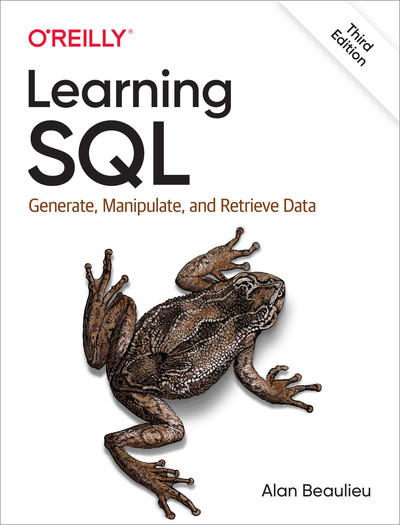
Learning SQL, 3rd Edition

Copyright © 2020 Alan Beaulieu. All rights reserved.

MHID: 978-1-492-05761-1

As data floods into your company, you need to put it to work right away—and SQL is the best tool for the job. With the latest edition of this introductory guide, author Alan Beaulieu helps developers get up to speed with SQL fundamentals for writing database applications, performing administrative tasks, and generating reports. You’ll find new chapters on SQL and big data, analytic functions, and working with very large databases.

Each chapter presents a self-contained lesson on a key SQL concept or technique using numerous illustrations and annotated examples. Exercises let you practice the skills you learn. Knowledge of SQL is a must for interacting with data. With Learning SQL, you’ll quickly discover how to put the power and flexibility of this language to work.

  • Move quickly through SQL basics and several advanced features
  • Use SQL data statements to generate, manipulate, and retrieve data
  • Create database objects, such as tables, indexes, and constraints with SQL schema statements
  • Learn how datasets interact with queries; understand the importance of subqueries
  • Convert and manipulate data with SQL’s built-in functions and use conditional logic in data statements
Posted on

Secure By Design

Security by design is a proactive approach to building systems, software, and devices with security in mind from the very beginning of the design process. It’s about making security an integral part of the foundation, rather than an afterthought or something that’s bolted on later.  

Here’s what that means in practice:

  • Considering threats from the outset: Instead of reacting to vulnerabilities after they’re discovered, security by design involves anticipating potential threats and weaknesses during the planning and design phases.  
  • Building in security controls: This means incorporating security measures like authentication, authorization, encryption, and access controls directly into the system’s architecture and code.  
  • Minimizing attack surface: Security by design aims to reduce the number of potential entry points for attackers, making it harder for them to exploit vulnerabilities.  
  • Defense in depth: Implementing multiple layers of security so that if one layer fails, others are still in place to protect the system.  
  • Secure defaults: Setting default configurations to the most secure options, so users are protected even if they don’t actively configure security settings.  
  • Continuous improvement: Security by design is an ongoing process that involves regularly evaluating and updating security measures to stay ahead of evolving threats.  

Why is security by design important?

  • More effective security: Building security in from the start is more effective and less costly than trying to add it later.  
  • Reduced vulnerabilities: Proactive security measures can prevent many vulnerabilities from ever being introduced.  
  • Stronger protection: Systems designed with security in mind are better equipped to withstand attacks and protect sensitive data.  
  • Increased trust: Security by design demonstrates a commitment to security, which can build trust with users and customers.  

Security by design principles:

While specific implementations vary, some common principles guide security by design:

  • Principle of least privilege: Granting users and processes only the minimum necessary permissions to perform their tasks.  
  • Separation of duties: Dividing sensitive tasks among multiple individuals to prevent any single person from having too much control.  
  • Fail-safe defaults: Designing systems so that they fail in a secure state, rather than an insecure one.
  • Economy of mechanism: Keeping security mechanisms simple and easy to understand, which makes them easier to implement and maintain.  
  • Complete mediation: Ensuring that every access request is checked against security rules.  

Security by design in different contexts:

Security by design is applicable to a wide range of areas, including:

  • Software development: Writing secure code, using secure libraries, and implementing secure development practices.
  • Hardware design: Building devices with secure boot processes, tamper-resistant features, and strong authentication mechanisms.
  • Network security: Designing networks with firewalls, intrusion detection systems, and secure protocols.  
  • Cloud security: Implementing security measures to protect data and applications in cloud environments.  

By embracing security by design, organizations can create systems and products that are more secure, resilient, and trustworthy.

Related

https://www.cisa.gov/securebydesign

Reference

(2025, February 3). In Google Gemini 2.0 Flash.