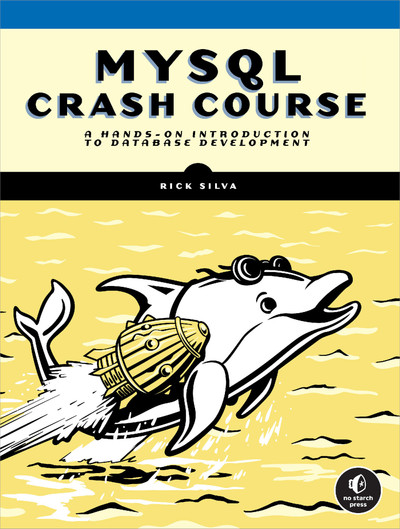
Copyright © 2023 by Rick Silva.
ISBN-13: 978-1-7185-0300-7 (print)
ISBN-13: 978-1-7185-0301-4 (ebook)
[GitHub] https://github.com/ricksilva/mysql_cc
MySQL Crash Course is a fast-paced, no-nonsense introduction to relational database development. It’s filled with practical examples and expert advice that will have you up and running quickly.
You’ll learn the basics of SQL, how to create a database, craft SQL queries to extract data, and work with events, procedures, and functions. You’ll see how to add constraints to tables to enforce rules about permitted data and use indexes to accelerate data retrieval. You’ll even explore how to call MySQL from PHP, Python, and Java.
Three final projects will show you how to build a weather database from scratch, use triggers to prevent errors in an election database, and use views to protect sensitive data in a salary database.
You’ll also learn how to:
- Query database tables for specific information, order the results, comment SQL code, and deal with null values
- Define table columns to hold strings, integers, and dates, and determine what data types to use
- Join multiple database tables as well as use temporary tables, common table expressions, derived tables, and subqueries
- Add, change, and remove data from tables, create views based on specific queries, write reusable stored routines, and automate and schedule events
The perfect quick-start resource for database developers, MySQL Crash Course will arm you with the tools you need to build and manage fast, powerful, and secure MySQL-based data storage systems.